Reach Truck vs Electric Stand-Up Forklift: Technical Comparison for Modern Warehouses
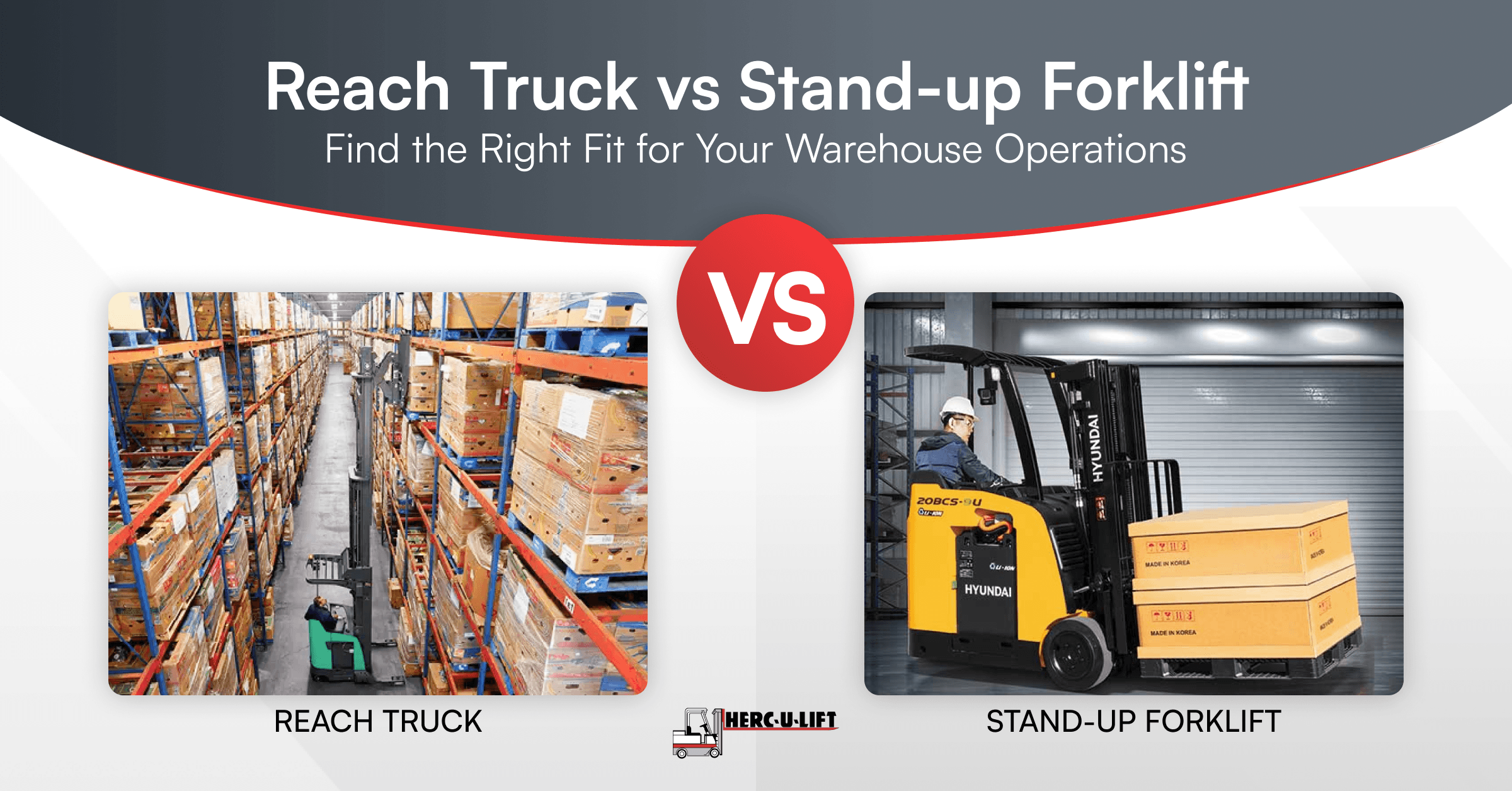
Warehousing has evolved over the years. Today, many facilities are shifting toward high-density layouts and taller racking systems – all in a bid to maximize capacity.
This is where reach trucks and standing forklifts come in.
These machines are built to meet modern warehouse demands. From the high-bay capabilities of a double deep reach truck, to the speed and flexibility of an electric standing forklift (or electric stand up forklift), each plays a specific role in space utilization.
Whether you’re dealing with limited aisle space or increasing pallet volume, this guide is for you. We’ll help you understand how these machines work and where they fit. We’ll even compare their features, so you can make informed decisions for your operations.
What Is a Reach Truck?
Reach trucks are designed for vertical load handling in constrained spaces where standard forklifts lack the necessary reach.
How a Reach Truck Works
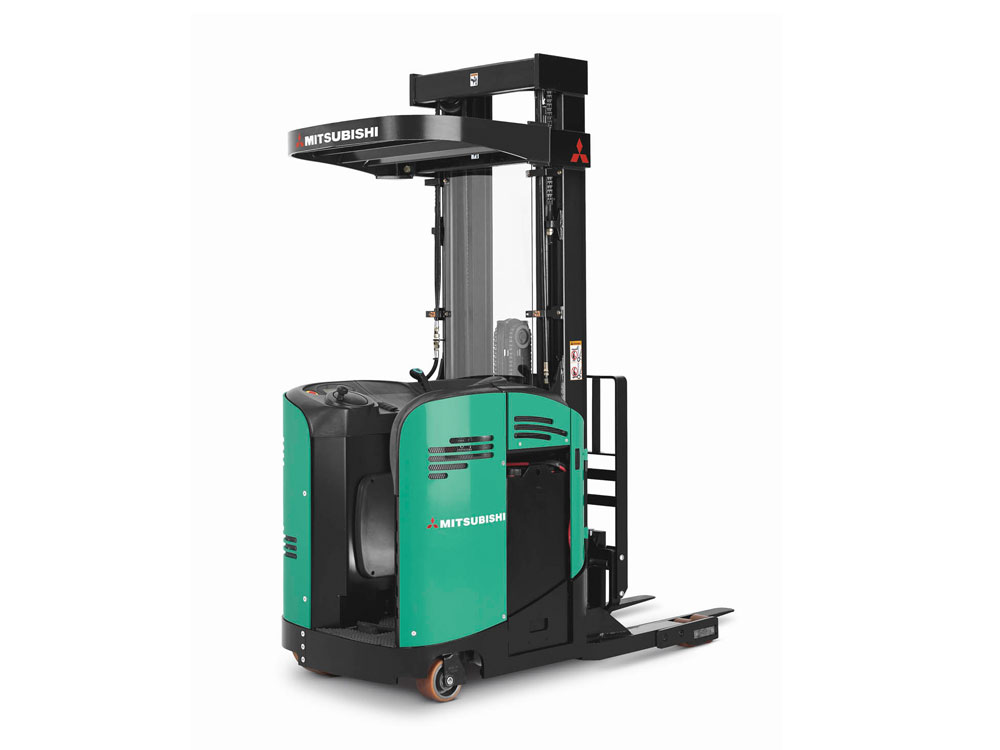
A reach truck uses a pantograph or scissor reach mechanism to extend the forks forward from the mast. This allows precise load placement without advancing the chassis.
The extending mast system provides tilt and lift capabilities. It often comes with side-shift functionality. This configuration operates effectively in aisles as narrow as 8 to 10 feet.
Typical Specifications
Lift heights often range from 30 to 45+ feet. Load capacities fall between 3,000 and 5,500 lbs. Some models reach up to 6,000 lbs.
Batteries operate on 36V or 48V systems, supporting opportunity charging for continuous operations. Chassis widths measure 48 to 60 inches, with loaded travel speeds of 7 to 9 mph.
Ideal Applications
Reach trucks excel in high-bay racking systems, indoor warehouses, and narrow aisle configurations.
What Are Standing Forklifts?
Standing forklifts are lift trucks designed for operators to work in a standing position. They enable faster movement and improved maneuverability.
What is an Electric Stand-Up Forklift?
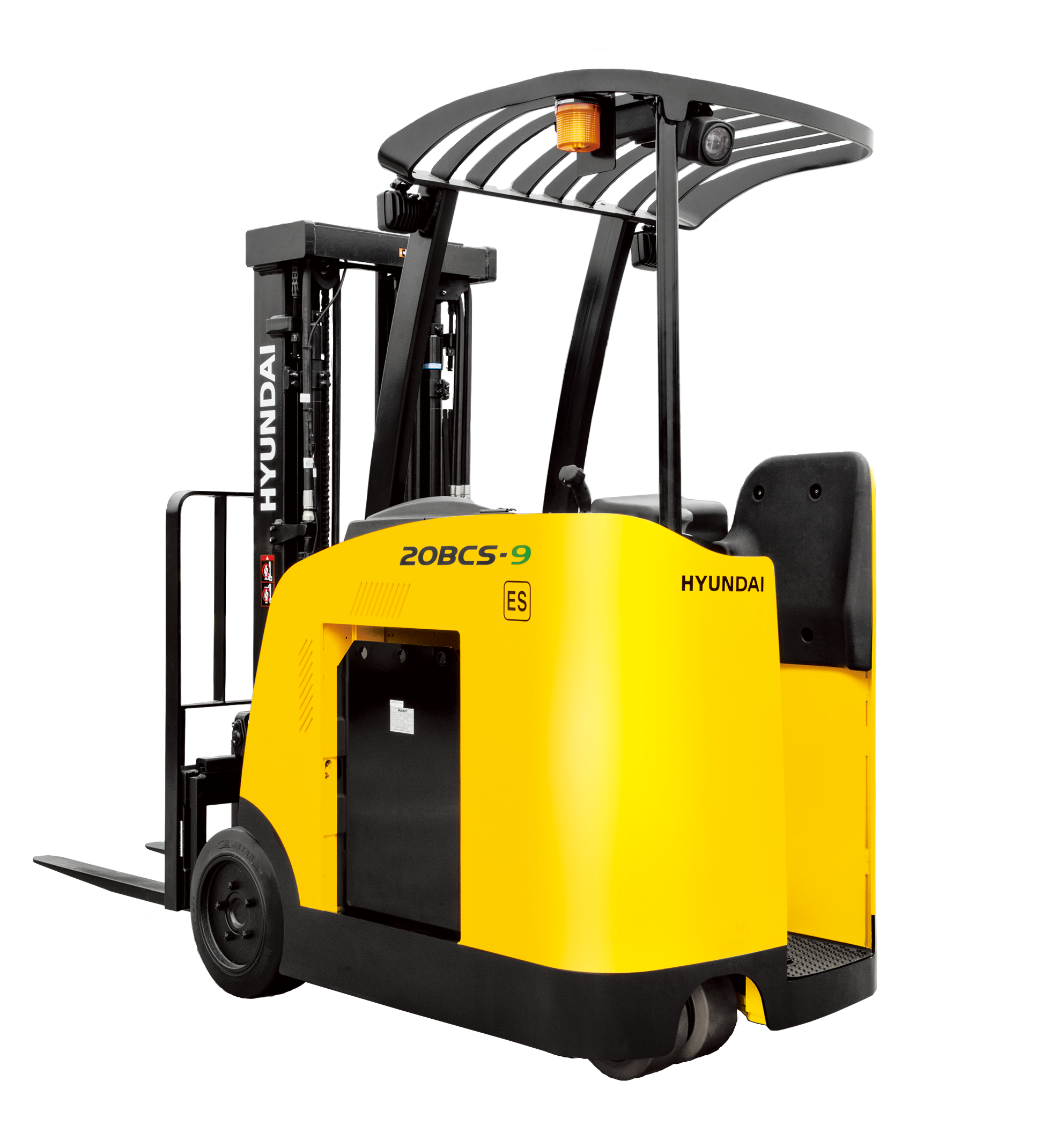
An electric stand-up forklift positions the operator in a sideways or forward-facing stance on a compact platform. The counterbalanced design incorporates a rear-mounted battery. It accommodates frequent mount/dismount cycles, such as in trailer unloading and pallet staging.
Controls are ergonomically placed. Low step-in heights reduce operator fatigue. Electric operation produces zero emissions. It is highly suitable for enclosed spaces.
Electric Standing Forklift vs Sit-Down Forklift
Electric standing forklifts offer higher unloaded speeds up to 8 mph. They also provide superior maneuverability with tighter turning radii and better visibility. Sit-down units suit extended hauls and heavier loads. Stand-ups perform in dynamic indoor picking.
Common Use Cases
These forklifts support operations in high-volume distribution centers and cross-docking workflows. They enhance productivity in scenarios requiring repeated operator entry and exit.
Reach Truck vs Electric Stand-Up Forklift: Key Differences
Feature | Reach Truck | Electric Stand-Up Forklift |
|---|---|---|
Lift Height | 30 to 45+ feet | 12 to 24 feet |
Aisle Width Req. | 8 to 10 feet (narrow) | 10 to 12 feet (VNA optional) |
Load Capacity | 3,000 to 5,500 lbs | 3,000 to 4,500 lbs |
Travel Speed (Loaded) | 6 to 7 mph | 5 to 7 mph |
Turning Radius | 6.5 to 8 feet | 6 to 7.5 feet |
Best Layout | High-bay, narrow aisles | Docks, floor-level, medium bays |
Cost Range (New) | $35,000 to $60,000 | $25,000 to $45,000 |
Vertical Storage Advantage
Reach trucks access heights beyond 30 feet. This enables full utilization of high-bay systems. Facilities may achieve significantly higher inventory density compared to lower-reach equipment.
Narrow Aisle Optimization
Reach trucks maximize racking density with requirements as low as 8 feet.
Dock and Floor-Level Versatility
Stand-up models facilitate faster trailer loading and staging. They outperform reach trucks in ground-level tasks.
Operator Efficiency Considerations
Stand-up forklifts may reduce mount/dismount time by 30%. Reach trucks optimize high-reach repetition, which helps minimize travel distance.
What Is a Double Deep Reach Truck?
A double deep reach truck is a specialized type of reach truck. It is designed to handle pallets stored two positions deep within a racking system. It effectively doubles storage depth within the same aisle footprint. For warehouses under pressure to increase capacity, this setup meets that need.
How Double Deep Racking Works
Double deep racking stores two pallets deep per bay. It places one pallet in front and another behind it. This results in storage density increase, ranging from 40 to 50% more pallet positions within the same footprint. Fewer aisles are required. More space can be allocated to inventory.
However, this setup typically operates on a last-in, first-out (LIFO) basis unless carefully managed. It is better suited for uniform or fast-moving SKUs rather than highly varied inventory.
Pantograph Reach Mechanism Explained
The double deep reach truck utilizes a pantograph (scissor) reach mechanism. Maintaining stability during this extension is critical.
These machines are designed with:
• Low center of gravity to counterbalance extended loads.
• Wide outrigger legs for lateral stability.
• Load retraction systems that pull the pallet back toward the chassis.
Pros and Trade-Offs
Category | Advantage | Trade-Offs |
|---|---|---|
Reach Capability | Access second-position pallets without repositioning | Lower capacity at full extension |
Storage Efficiency | Increased storage capacity | Reduced selectivity |
Travel & Positioning | Less repositioning in aisles | More precise positioning required |
Productivity Impact | Efficient for bulk handling | Slightly slower retrieval cycles |
Operator Requirements | Effective in structured workflows | Higher skill and training needed |
Cost & Complexity | Maximizes space without expansion | Higher cost and maintenance |
Double deep reach trucks trade speed and selectivity for significantly higher storage density.
When a Double Deep Reach Truck Makes Sense
A double deep reach truck is not for every operation. But it makes the most sense when:
• SKU consolidation is possible If you’re storing the same products in bulk, grouping pallets together reduces the impact of limited access.
• High-volume, identical pallet storage is common Ideal for manufacturing or distribution centers handling large quantities of the same SKU.
• Warehouse footprint is limited When expansion isn’t feasible, increasing storage density vertically and inward becomes the next best option.
How to Choose the Right Equipment for Your Warehouse
Selecting the right equipment means aligning machinery with your warehouse operations. The wrong machine leads to bottlenecks and safety risks. So, remember these factors before making a choice:
Evaluate Your Rack System
Mismatch between rack design and equipment leads to inefficiencies or even safety risks.
Start with your racking configuration:
• Selective racking Best for operations that require high accessibility to every pallet. Works well with standard reach trucks and standing forklifts.
• Double deep racking Designed for higher density storage, but requires a double deep reach truck with extended reach capability.
You should also assess:
• Bay depth: Typically ranges from 48 to 96 inches.
• Beam spacing: Impacts lift clearance and fork positioning.
Measure Aisle Width Accurately
Equipment should fit your layout – not the other way around.
• Narrow aisle setups: Typically require 8 to 10 feet clearance for reach trucks.
• Standard operations: May allow 10 to 12 feet, suitable for electric stand-up forklifts.
Even small miscalculations can:
• Limit maneuverability
• Reduce productivity
• Increase the risk of collisions or rack damage
Always measure:
• Rack-to-rack clearance
• Turning space at aisle ends
• Obstructions like columns or dock areas
Analyze Lift Height Requirements
Your maximum lift height should match:
• Current storage height: What’s your highest rack level today?
• Clearance allowance: Add at least 6–12 inches for safe placement
• Future vertical expansion: Will you be adding higher racking later?
Throughput & Cycle Frequency
Understanding how much work your equipment needs to handle daily is key to choosing the right type.
Evaluate:
• Picks per hour
• Pallets moved per shift
• Peak vs average workload
General guidelines:
• Reach trucks: Ideal for high-rack operations with 20 to 30 picks per hour.
• Standing forklifts: Better for floor-level movement with higher cycle frequency (40+ picks/hour).
Operator Experience Level
Equipment performance heavily relies on the people operating it.
• Reach trucks: Require advanced training due to high lift heights and extended reach operations.
• Standing forklifts: Easier to learn. Better suited for fast-paced operations.
Ensure operators are properly trained and certified. Also, reinforce load handling practices and visibility awareness in the workplace.
Cost Analysis & ROI Considerations
Smart equipment decisions go beyond upfront price. True ROI comes from productivity gains, energy efficiency, and long-term operating costs.
Upfront Equipment Investment
Costs vary depending on a model’s features, including lift height, battery type, and configuration. Generally, these machines cost:
• Reach trucks: $35,000 to $60,000+
• Electric stand-up forklifts: $25,000 to $45,000+
Key cost drivers:
• Battery type (lithium-ion adds ~20–30%)
• Lift height and mast design
• Load capacity
• Brand and service support
Productivity Gains
ROI is primarily driven by efficiency improvements.
• Reduced travel time: In dense layouts, reach trucks may cut aisle travel by 20 to 25%.
• Faster handling: Improved stacking and retrieval, especially at height.
• Labor savings: A 15 to 25% productivity gain can reduce headcount or increase throughput.
Energy Efficiency & Battery Considerations
Lithium-ion:
• Opportunity charging (no full cycles required)• Consistent performance
• Minimal maintenance
• Higher upfront, lo
Lead-acid:
• Lower initial cost• Requires charging rooms and maintenance
• Performance drops as charge depletes
Typical energy cost: ~$0.02 to $0.05 per hour
3–5 Year Total Cost of Ownership Example
To put things into perspective, here’s a sample computation:
Scenario: Mid-sized warehouse
• 10-unit fleet (mixed equipment)
• Avg. cost per unit: $40,000
• Initial investment: ~$400,000
Annual impact:
• Labor savings: $100,000 to $120,000
• Maintenance/downtime: $20,000 to $30,000
• Energy savings: $10,000+
Total annual savings: ~$130,000 to $160,000
ROI:
• Payback period: ~2.5 to 3 years
• Years 3–5: Strong positive return
Safety & Compliance Considerations
OSHA and Warehouse Safety Standards
OSHA and general warehouse safety standards can be summed up into two main points:
1. respecting equipment limitations, and
2. ensuring operators are properly trained.
Every machine has a rated load capacity. Ignoring these limits (especially during high lifts or extended reach operations) increases the risk of instability and accidents. Safety training ensures that operators understand proper equipment usage. They know how to respond to real-world scenarios, like uneven loads or tight aisles.
Certification should be maintained and refreshed at least every three years. Or sooner, if there are operational changes or safety incidents.
Stability in High Lift Applications
Even small shifts in positioning can have an impact on a machine’s balance. This is particularly true for reach trucks. Loads are frequently handled at height and at extended reach.
Managing the center of gravity is important. Loads should remain properly aligned and centered on the forks to avoid uneven weight distribution.
Maintenance Best Practices
Daily inspections should be part of every shift. Operators should check forks for visible damage and ensure controls respond correctly. Moreover, they have to verify that brakes, steering, and warning devices are functioning properly.
Weekly inspections of the mast and chain system are also recommended. The mast should move smoothly without misalignment or unusual resistance. Chains should be checked for wear, proper lubrication, and correct tension.
Battery care varies by type. Lead-acid batteries require regular watering (after charging) and proper ventilation (during charging). It also needs adherence to full charging cycles to prevent damage. Lithium-ion batteries, on the other hand, require minimal maintenance. However, they should be monitored through onboard diagnostics and charged according to manufacturer guidelines.
Common Buying Mistakes
Choosing Based on Price Alone
Lower upfront cost comes with trade-offs, such as:
• Weaker build quality
• Limited service support
• Longer repair times
What looks like savings upfront can turn into a higher total cost of ownership.
Ignoring Warehouse Layout Constraints
Align equipment specs with actual measurements, not estimates. Equipment that doesn’t match your layout cause problems, like:
• Aisles too narrow for safe turning
• Insufficient clearance for racks or docks
Underestimating Lift Height Needs
Buying only for current rack height limits future flexibility.
• Adding even one higher rack level later may require completely new equipment.
• Insufficient lift height also reduces operational efficiency when stacking near max limits.
Overlooking Service and Parts Availability
Even the best equipment needs reliable service.
• Limited parts availability can sideline equipment for days or weeks.
• Lack of trained technicians increases repair times.
What to look for:
• Local service coverage
• Readily available spare parts
• Responsive support team
Failing to Consider Future Expansion
Choosing equipment without plans to scale often leads to early replacement or mixed fleets.
• Increased SKU count
• Higher throughput demands
• Layout changes or new facilities
When to Upgrade to a Reach Truck or Electric Stand-Up Forklift
Before upgrading your equipment, consider these factors:
Increasing vertical storage demand As racking heights increase, standard forklifts will fall short. Reach trucks provide the lift height and control needed for high-bay storage.
Warehouse redesign Layout changes often require different equipment. Upgrading during redesign or relocation avoids future bottlenecks.
Growth in SKU count More SKUs mean tighter spaces and more complex movement. Reach trucks improve vertical storage. Meanwhile, electric stand-up forklifts enhance maneuverability on the floor.
Labor inefficiencies Excessive travel, repositioning, or manual handling signals equipment mismatch. The right upgrade boosts throughput without adding labor.
Recurring safety incidents or near misses Improper equipment increases risk. Upgrading to the right one improves stability and control.
Why Equipment Partnership Matters
Facility evaluation support Strong partners assess layout, load profiles, and throughput. This helps them recommend solutions that match your operational needs.
Rack layout consultation Even small layout adjustments can improve flow and storage density. Experienced partners help identify these gains.
Service network availability Fast, reliable service minimizes downtime.
Parts and maintenance planning Consistent access to parts and preventive maintenance reduces costly delays.
Lifecycle support End-to-end support (from selection to replacement) improves consistency and extends your equipment’s life.
Final Thoughts: Maximizing Warehouse Efficiency with the Right Lift Equipment
Ultimately, maximizing warehouse efficiency comes down to one major principle: alignment.
Your equipment should match your facility’s layout, throughput demands, and long-term operational goals. Reach trucks excel at unlocking vertical storage within narrow aisles. Electric stand-up forklifts improve speed and maneuverability in high-traffic zones. Each has a clear role. But the real advantage comes from applying the right solution to the right problem.
That’s why decisions should be guided by total cost of ownership rather than upfront price alone. Productivity gains, labor efficiency, energy usage, maintenance requirements, and equipment lifespan all contribute to long-term value. When properly matched to the operation, these machines don’t just move pallets. They remove bottlenecks and enhance your workflow.
The best way to get this right is through a clear, data-driven evaluation of your operation. Accurate aisle measurements, realistic throughput targets, and a forward-looking view of growth all help ensure your investment holds up as demands grow.
If you’re still assessing your next move, get input from an experienced equipment specialist. We can provide valuable insights to meet your equipment needs.



 →
→