OEM vs Aftermarket Parts: Which Is Best for Material Handling Equipment?
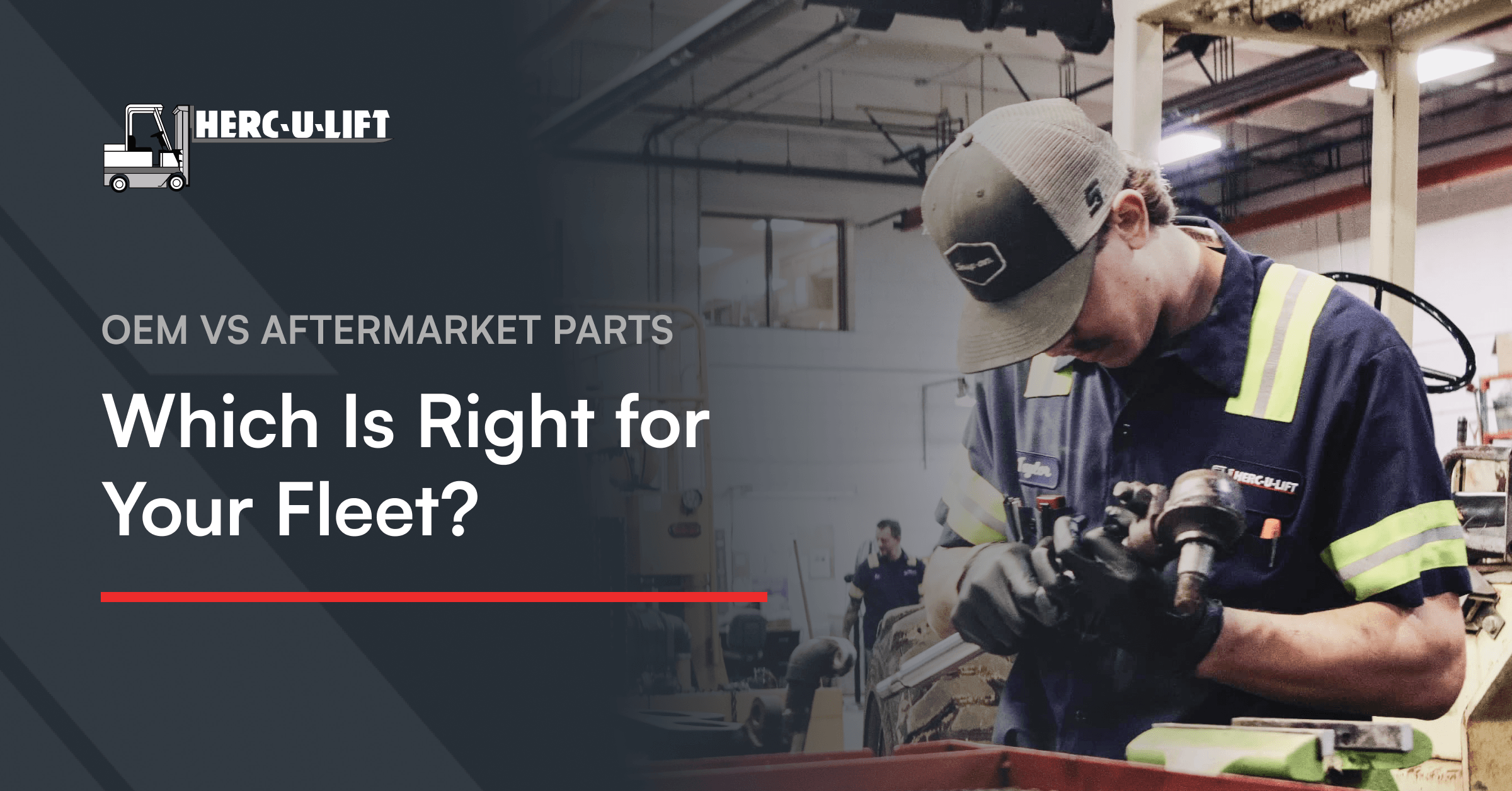
In material handling operations, replacement parts are a normal part of an equipment’s lifecycle.
Forklifts, reach trucks, and scissor lifts experience gradual wear across their systems. Even when they’re well-maintained, machines eventually need new tires, hydraulic components, bearings, lift chains, filters, electrical parts, and brakes. These important parts help these machines to stay effective.
That said, warehouse operators and maintenance teams have to decide whether OEM or aftermarket parts make more sense.
The answer is rarely straightforward.
The right choice usually depends on equipment age, operating conditions, maintenance budgets, equipment utilization, and parts availability.
In many operations, the decision directly affects equipment efficiency. Selecting the right replacement can extend equipment lifespan while improving cost control. On the other hand, using the wrong part may create compatibility issues or premature wear.
What Are OEM Equipment Parts?
OEM means Original Equipment Manufacturer. OEM parts are produced by the equipment manufacturer or by authorized suppliers. These are specifically designed for particular equipment models. They are manufactured to match the original engineering standards used when the machine was built.
For forklifts and lift trucks, this may include:
• OEM mast rollers
• OEM hydraulic cylinders
• OEM electronic control modules
• OEM sensors
• OEM steering components
• OEM drive motors
Because OEM parts are designed specifically for the machine, they provide predictable fit. Many warehouse operators prefer OEM components for newer equipment fleets where maintaining factory performance standards is a priority.
What Are Aftermarket Equipment Parts?
Aftermarket equipment parts are replacement components manufactured by third-party companies. These parts are designed to be compatible with specific equipment models. They are widely available through industrial parts distributors.
Examples include:
• Aftermarket forklift tires
• Replacement lift truck chains
• Hydraulic seals
• Bearings
• Filters
• Brake components
• Electrical connectors
Many aftermarket manufacturers specialize in industrial equipment components. They produce parts for a wide range of forklift brands and models. Some focus specifically on high-wear consumable items. Others manufacture more complex replacement systems.
OEM vs Aftermarket Equipment Parts: Key Differences
OEM and aftermarket parts do the same job. However, they vary in price, fit, and warranty.
Here’s a table comparing them:
Factor | OEM Parts | Aftermarket Parts |
|---|---|---|
Manufacturing Source | Original equipment manufacturer | Third-party manufacturer |
Compatibility | Guaranteed for specific models | May vary by supplier |
Cost | Typically higher | Usually lower |
Availability | Sometimes limited | Often widely available |
Lead Time | May require ordering | Faster access in many cases |
Warranty | Strong manufacturer support | Varies by supplier |
Quality Consistency | Highly standardized | Depends on manufacturer |
Operational priorities determine which option makes sense. For example, a warehouse operating newer electric forklifts may prioritize OEM electronics for reliability. Meanwhile, an older mixed fleet may prefer aftermarket tires or brake components to maintain their budget.
Pros and Cons of OEM Parts
Advantages
Guaranteed CompatibilityOEM parts are designed for specific equipment models. This ensures proper function and prevents compatibility-related failures.
Manufacturer Quality Standards
Components are built to the original manufacturer’s specifications. This results in consistent material quality. For critical systems (hydraulics, electronics), that significantly reduces operational risk.
Warranty Support
OEM parts preserve manufacturer warranty coverage on newer equipment. Claims are easier to process when original components are used.
Reliable Performance
In general, parts are engineered for long-term durability under the same conditions the equipment was originally tested for.
Disadvantages
Higher Purchase CostOEM parts are more expensive than aftermarket alternatives. The total expenses add up quickly for fleets with frequent maintenance needs.
Longer Lead Times
Components may take longer to source, depending on availability. This is specifically true for older or less common equipment models.
Limited Supplier Options
Parts are usually distributed through authorized dealers. As a result, sourcing essential components can sometimes be difficult during emergency repairs.
Pros and Cons of Aftermarket Parts
Advantages
Lower CostAftermarket parts are usually more affordable than their OEM equivalents. Overall cost savings may range from 20% to 50%. This makes them attractive for high-wear items and cost-sensitive fleet operations.
Greater Availability
Components are often stocked by multiple distributors. This means easier accessibility and lesser wait times.
Competitive Manufacturing Innovation
Many manufacturers specialize in industrial components. In some cases, they even introduce design improvements that meet or exceed OEM performance for non-critical applications.
Broader Supplier Network
Parts are not limited to a single manufacturer. Buyers benefit from a wider range of suppliers and pricing options. This greater accessibility allows maintenance teams to respond faster.
Disadvantages
Inconsistent Quality Between BrandsQuality can vary widely depending on the manufacturer. Some aftermarket parts are built to high industrial standards. Others may use lower-grade materials or less precise manufacturing processes.
Compatibility Risks
Even when marketed as compatible, some parts may not exactly match OEM tolerances. This can result in reduced efficiency or premature wear on related components.
Limited Warranty Coverage
Parts often come with shorter or more limited warranties. In some cases, warranty protection depends entirely on the supplier rather than the original equipment manufacturer.
When OEM Parts Are the Better Choice
OEM parts are typically the preferred option when equipment reliability and warranty protection are critical. In this case, the priority is not minimizing upfront cost. Instead, operators focus on consistent performance and reduce failure risks.
This is especially important in the following operational scenarios:
Equipment still under manufacturer warranty
Using aftermarket components can affect warranty coverage. OEM parts ensure compliance with manufacturer requirements and protect warranty validity.
Proprietary electronic systems
Modern forklifts often rely on integrated control modules and software-driven systems that are engineered to manufacturer specifications. OEM components integrate seamlessly without calibration issues or diagnostic errors.
High-precision hydraulic components
Systems involving lift capacity and mast control depend on exact tolerances. OEM hydraulic components maintain consistent pressure control. They also reduce the risk of performance variation or premature wear.
Critical safety components
Parts that directly affect operator and site safety (such as braking systems and load-handling mechanisms) are best replaced with OEM components. This ensures predictable performance under load.
Case Study: OEM Electronics Prevented Repeat Failures
A Minnesota-based warehouse operator installed aftermarket control sensors on their electric forklifts. He did so to reduce maintenance expenses. While the components initially functioned well, intermittent fault codes soon appeared during peak operations.After repeated troubleshooting delays, the company switched back to OEM components. The change restored system stability. It also reduced recurring downtime caused by diagnostic inconsistencies.
When Aftermarket Forklift and Lift Truck Parts Make Sense
Aftermarket parts are often a practical and cost-effective solution for maintenance strategies. For many fleet operators, they provide a balanced way to manage ongoing equipment upkeep without compromising efficiency.
Situations where aftermarket parts are a strong fit include:
Older equipment fleets
As forklifts age, OEM parts may become limited or expensive. Aftermarket parts extend equipment life at a lower cost. This especially applies when machines are already outside warranty periods.
Routine wear components
Parts that experience frequent replacement (such as filters, tires, and brake pads) are often well-suited for aftermarket sourcing. This is because of their standardized design and lower critical risk.
Budget-sensitive maintenance programs
For operations managing tight maintenance budgets, aftermarket parts allow teams to control costs.
High-volume consumable parts
Consumable parts are replaced regularly in high-utilization environments. Aftermarket options lower per-cycle maintenance costs.
Case Study: Aftermarket Wear Components Reduced Fleet Costs
In Wisconsin, a distribution center transitioned to aftermarket tires and filters for their forklifts. They purchase directly from a reputable industrial supplier. Because the items required frequent replacement, the company significantly reduced annual maintenance spending. The savings were then redirected toward other business expenses, including operational upgrades.Quality Considerations for Aftermarket Equipment Parts
Experienced parts distributors can help businesses identify reliable aftermarket solutions.
Consider these factors as you explore your options:
Supplier Reputation
• How long has the supplier supported material handling equipment parts?
• Do they specialize in forklifts and industrial machines?
• What do online reviews say about their products and delivery time?
Manufacturing Standards
• Are the parts tested for industrial or heavy-use applications?
• What quality control processes are used during manufacturing?
• Are the materials comparable to OEM specifications?
Compatibility Guarantees
• Can you match aftermarket parts using model and serial numbers?
• Are installation instructions or technical references available?
• What happens if the part does not fit correctly?
Industry Certifications
• Are the parts produced under ISO-certified manufacturing systems?
• Do the components meet applicable industrial safety standards?
• Are testing or inspection records available for critical components?
Customer Support
• Is technical support available before purchase?
• Do they provide support after the sale if issues arise?
• How quickly do they respond to emergency requests?
Cost Comparison: OEM vs Aftermarket Replacement Parts
In many cases, aftermarket components may cost:
• 20 to 50% less than OEM alternatives
• Less for high-volume consumables
• Less for older equipment platforms
However, purchase price alone should not determine the decision.
Fleet managers should also evaluate:
• Downtime risk
• Installation labor
• Expected service life
• Maintenance frequency
• Replacement cycles
A cheaper component that fails prematurely may eventually increase total operating cost. Imagine spending more money on repeated labor or secondary damage.
At the same time, high-quality aftermarket parts provide excellent return on investment when sourced from reliable suppliers.
Common Replacement Parts for Forklifts and Lift Trucks
Several forklift and lift truck components require periodic replacement. This includes:
Forklift tires
Uneven wear, chunking, or reduced traction affect stability and control. Take note that cushion and pneumatic tires wear differently, depending on the environment.
Lift chains
Poor lubrication and heavy loads may accelerate deterioration. Worn chains affect lifting accuracy and create serious safety risks if not replaced promptly.
Hydraulic seals
As seals age, cracking and wear reduce lifting power. Worse, they increase the likelihood of failure during operations. For this reason, replacing seals early helps avoid expensive hydraulic repairs.
Bearings
Continuous vibration, contamination, and heavy operation eventually cause wear. Failing bearings create grinding noises and excess friction.
Brake components
Brake pads, drums, and related components wear naturally through daily stopping and maneuvering. Reduced braking performance directly affects workplace safety, especially in busy warehouse environments with pedestrian traffic.
Filters
Filters are among the most frequently replaced maintenance items. When they’re dirty or clogged, they reduce system efficiency. Moreover, they increase strain on engines and hydraulic components.
Rollers
Worn rollers create uneven mast movement or instability during load handling. Regular inspection helps identify wear before major mast damage develops.
Electrical connectors
Electrical connectors are vulnerable to corrosion, vibration, and moisture exposure. Damaged connectors cause intermittent faults or sensor errors.
Maintenance teams often track replacement intervals based on:
• Operating hours
• Equipment age
• Load intensity
• Environmental conditions
To manage long-term costs, many operations combine OEM components with carefully selected aftermarket forklift parts for routine wear items and non-critical repairs. Businesses also rely on dependable lift truck replacement parts suppliers to maintain equipment uptime.
With well-structured maintenance programs, operators anticipate replacement cycles and control maintenance costs. This reduces unexpected downtime across the fleet.
How to Choose the Right Equipment Parts Supplier
Selecting the right supplier is just as important as choosing the right replacement component.
Businesses should evaluate suppliers based on these factors:
• Inventory availability
• Product selection
• Shipping speed
• Technical expertise
• Compatibility support
• Experience with industrial equipment fleets
An experienced supplier can help prevent costly ordering mistakes. For example, delays during urgent repairs are avoided. Moreover, most operators prefer suppliers that support mixed fleets rather than specializing in only one equipment brand.
Frequently Asked Questions About OEM vs Aftermarket Equipment Parts
Conclusion
OEM parts provide guaranteed compatibility and manufacturer-backed reliability. For newer equipment, proprietary systems, and safety-critical components, OEM solutions often remain the preferred option despite the higher cost.
In comparison, aftermarket parts deliver substantial savings and strong operational value when sourced from reputable suppliers. For older forklift fleets and routine wear components, high-quality aftermarket parts may reduce maintenance expenses without sacrificing dependable performance.
Ultimately, the best choice depends on the equipment application, operational demands, and downtime tolerance.
In any case, working with an experienced equipment parts supplier is a must. This ensures the right balance between cost efficiency, compatibility, and long-term equipment reliability.



 →
→