How Electric Pallet Jacks Improve Warehouse Safety Productivity and Material Handling
Every pallet movement impacts warehouse efficiency.
Electric pallet jacks help move heavier loads faster with less operator effort.
As warehouse operations become more demanding, powered material handling equipment has become an industry staple.
Today’s buyers can choose from different pallet handling equipment types, including:
- • Electric pallet jacks
- • Power pallet jacks
- • Electric pallet trucks
- • Pallet lifters
- • Traditional hydraulic pallet trucks
In this guide, we explain what electric pallet jacks are. We also tell you about important factors to consider when selecting one. Whether you’re planning to buy or rent, understanding these machines will help you make an informed decision.
What Is an Electric Pallet Jack
An electric pallet jack is a powered material handling machine. It is designed to lift and transport palletized loads. It uses an electric drive motor to move heavy loads without physical strain.
Most electric pallet jacks share the same core components, such as:
• Electric drive motor
• Hydraulic lifting mechanism
• Battery system
• Steering handle, travel controls
• Forks, load wheels
• Electronic control system
The operator positions the forks beneath a pallet and raises the load using the hydraulic lift. Once elevated, the electric drive motor moves the pallet through the warehouse. Steering and speed are controlled from the handle. This allows precise movement in loading docks and storage areas.
Different Types of Pallet Jacks
The right pallet jack depends on:
• Load weight
• Travel distances
• Facility layout
• Daily workload
Here are the different options:

Electric Pallet Jack vs Hydraulic Pallet Truck
Here’s a quick comparison:
Feature | Electric Pallet Jack | Hydraulic Pallet Truck |
Lifting Capacity | Moderate to heavy loads | Moderate to heavy loads |
Travel Speed | Faster powered travel | Operator-powered |
Operator Effort | Low | High |
Productivity | High | Best for occasional use |
Initial Cost | Higher | Lower |
Operating Costs | Battery charging and maintenance | Minimal maintenance |
Best Applications | Medium to large warehouses | Small warehouses and retail stockrooms |
Lifting Capacity
Lifting capacity varies by manufacturer and model. Both are designed to move palletized materials safely when operated within rated limits. Consider travel distance and workload when selecting your equipment.Travel Speed
Electric pallet jacks use a battery-powered drive motor. Operators can move pallets faster than a manual hydraulic pallet truck.Labor Requirements
Manual pallet trucks rely on operator effort for pushing, pulling, and maneuvering loads. Electric pallet jacks lessen physical effort.Maintenance
Routine inspections and occasional hydraulic service are often enough to keep manual pallet trucks operating reliably.Electric pallet jacks require additional maintenance. Batteries, electrical systems, motors, and electronic controls all need periodic inspection and servicing.
Initial Cost
Manual pallet trucks typically cost less upfront. This makes them an attractive option for businesses with limited budgets. Electric pallet jacks require a larger investment. However, some organizations prefer the advantages of greater efficiency.Operating Costs
Electric pallet jacks require battery charging, scheduled maintenance, and occasional component replacement. Manual pallet trucks have lower ongoing operating costs.Which One Is Right for Your Operation?
Manual hydraulic pallet trucks are ideal for:
• Small warehouses
• Retail backrooms
• Light daily workloads
• Short travel distances
• Occasional pallet movement
Electric pallet jacks are most suitable for:
• Medium, large warehouses
• Distribution centers
• Manufacturing facilities
• High-volume shipping, receiving
• Operations focused on productivity, ergonomics
Common Warehouse Applications
Distribution Centers
Distribution centers may move thousands of pallets each day. Products are constantly received, stored, and shipped to customers.Electric pallet jacks are used for:
• Trailer loading, unloading
• Moving inventory to storage
• Order picking support
• Shipping, receiving operations
Manufacturing Plants
Manufacturing facilities depend on a steady flow of materials. Electric pallet jacks significantly reduce manual handling between departments.Common uses include:
• Delivering materials to production lines
• Transporting finished goods
• Supporting assembly operations
• Moving pallets between workstations
Food and Beverage Warehouses
Food distribution centers operate under strict schedules. Products move quickly from receiving, storage and outbound shipments. Electric pallet jacks improve productivity by consistently moving heavy loads.Cold Storage Facilities
Low temperatures can make manual pallet handling more demanding. Electric pallet jacks allow employees to move products inside refrigerated and freezer environments.Retail Distribution Centers
Retail distribution centers handle large product volumes destined for multiple store locations. Speed and accuracy are essential.Electric pallet jacks move inventory between storage racks, staging areas, and loading docks. Their maneuverability makes them well-suited for facilities with frequent pallet movement.
Shipping and Receiving Docks
Loading docks are among the busiest warehouse areas. Products constantly move between trailers and storage locations. Electric pallet jacks speed up loading and unloading. Faster trailer turnaround also improves overall productivity during peak operating hours.Key Features to Evaluate
Electric Pallet Jack Prices
Several factors influence electric pallet jack prices:
Equipment Type
Manual hydraulic pallet trucks are the most affordable. Electric walkie models often cost more. Ride-on and heavy-duty pallet jacks are typically the most expensive.Load Capacity
Higher-capacity models require larger motors and more robust hydraulic components. As lifting capacity increases, so does the purchase price.Battery Technology
Lead-acid batteries are cheaper but require regular maintenance. Lithium-ion batteries usually cost more initially. However, they offer faster charging, longer service life, and less routine maintenance.Features and Technology
Advanced features increase pricing. Examples include ride-on platforms, regenerative braking, telematics, programmable performance settings, and enhanced safety systems.Manufacturer
Established manufacturers invest more in engineering, product testing, dealer support, and parts availability. So, they charge higher for their machines.Warranty and Dealer Support
Strong warranty and dealer network add value to the equipment. Reliable service, readily available parts, and factory-trained technicians keep equipment in service.Leading Pallet Jack Manufacturers
The market features dozens of equipment brands. Top manufacturers stand out through build quality, responsive dealer support, and quick parts availability.
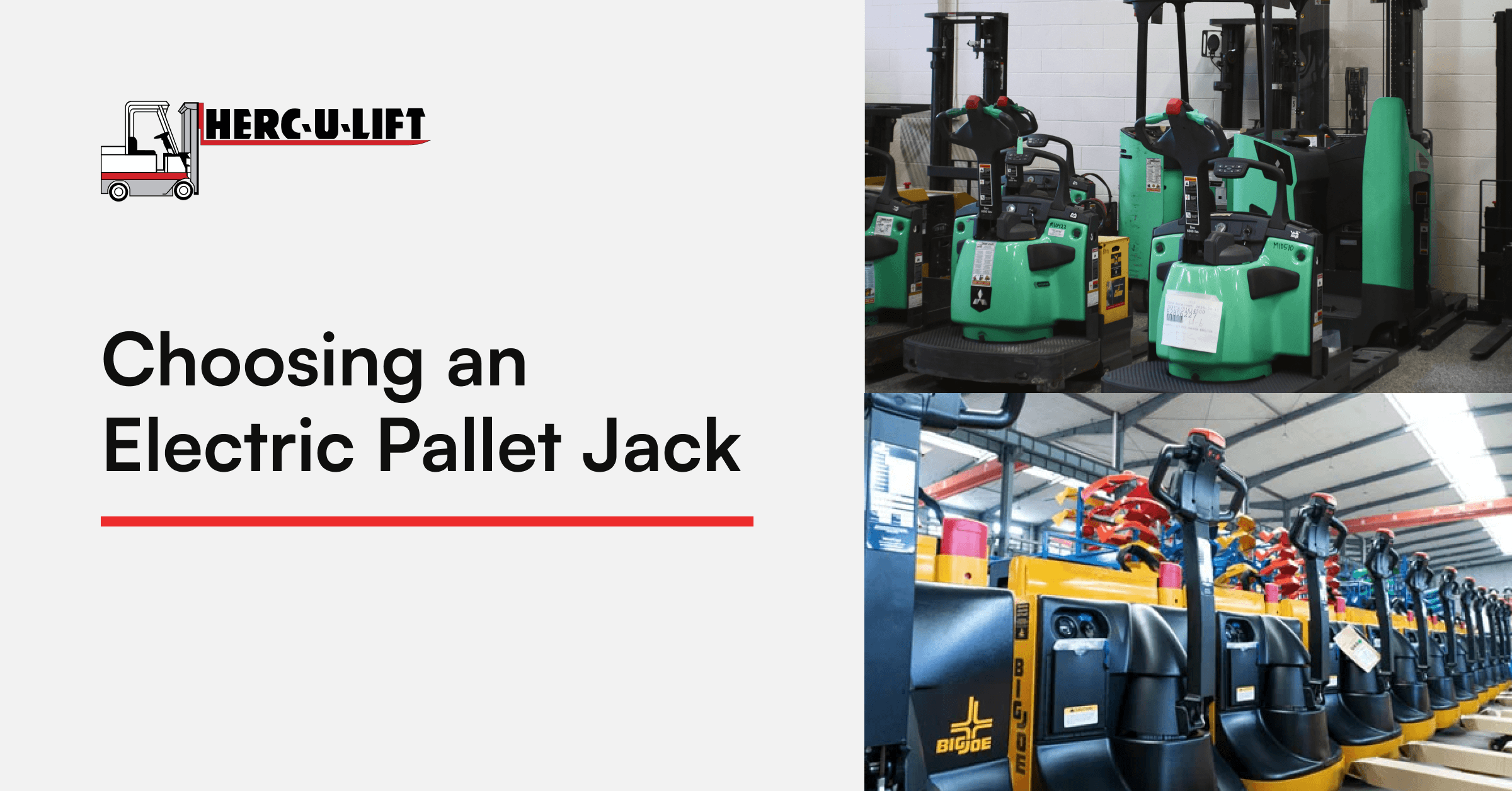
Leading brands build solutions for specific facility needs. For example, Big Joe is known for compact, highly maneuverable electric walkie jacks and modern lithium-ion models. They are an industry favorite for tight aisles, retail floors, and urban delivery trucks. Mitsubishi is trusted for high-capacity, heavy-duty applications. Their robust trucks handle high-throughput distribution centers and demanding, multi-shift warehouse environments.
What to Look for in Pallet Jack Manufacturers
When comparing manufacturers, use this checklist:
□ Reliable equipment built for commercial or industrial use.
□ Readily available replacement parts when repairs are needed.
□ Strong dealer support for maintenance, warranty service, technical assistance, etc.
□ Comprehensive warranty coverage with clear terms.
□ Easy service access to batteries, hydraulic components, wheels, and other maintenance points.
□ Modern safety features such as emergency stop controls, speed reduction, operator presence systems, and stability enhancements.
□ Proven long-term value through dependable performance and responsive service.
Questions to Ask Before Choosing a Manufacturer
- • How reliable is the equipment in daily operation?
- • How quickly can replacement parts be obtained?
- • What’s covered in the warranty?
- • Are technicians readily available when needed?
- • Do they have a strong dealer network?
Maintenance Best Practices
Small problems quickly become expensive repairs if they go unnoticed. A consistent maintenance program keeps equipment operating safely.
Common Operator Mistakes
What To Avoid | Why It’s a Problem | What To Do Instead |
Overloading the Equipment | Places unnecessary stress on the hydraulic system, drive motor, forks, and other components. It also increases the risk of product damage and equipment failure. | Stay within the manufacturer’s rated load capacity. |
Improper Pallet Positioning | An unevenly positioned pallet can shift during transport. This reduces stability and increases the risk of damaged products. | Center the load evenly on the forks before lifting. |
Traveling with Elevated Loads | Affects stability and limits the operator’s visibility while moving. | Keep the load at the recommended travel height during transport. |
Ignoring Battery Charging Practices | Improper charging shortens battery life and decreases equipment performance. | Observe the manufacturer’s charging recommendations. |
Using Equipment on Unsuitable Surfaces | Uneven ground, potholes, and loose gravel accelerate component wear. | Operate equipment only on approved surfaces. |
Rushing Through Tight Spaces | Increases the risk of collisions with racks or pedestrians. | Slow down near blind corners and congested work areas. |
Skipping Daily Inspections | Small issues such as hydraulic leaks, damaged forks, or worn wheels can become safety hazards. | Perform a pre-operation inspection before every shift. Address issues immediately. |
Safety Considerations
Inspect Before Operating
Inspections should be done before each shift. Equipment with damaged forks, hydraulic leaks, faulty controls, or other safety concerns should be removed from service.Operate Responsibly
Stay within the rated load capacity. Keep loads low while traveling. Watch for pedestrians and blind corners. Slow down near loading docks and congested areas.Follow OSHA Best Practices
OSHA requires employers to train operators of powered industrial trucks before they operate the equipment. Likewise, operators should observe site-specific safety procedures.When to Upgrade from Manual to Electric Equipment
If several of these situations describe your operation, it may be time to consider an upgrade.
□ Operators move pallets throughout most of the day.
□ Employees regularly experience fatigue from pushing and pulling heavy loads.
□ Your warehouse has expanded, increasing travel distances.
□ Daily pallet movement continues to increase.
□ Loading docks remain busy throughout the day.
□ You want to improve productivity without adding more labor.
□ You’re evaluating long-term operating costs instead of just the purchase price.
Real-World Example
One warehouse in Maple Plain has doubled its daily shipments over the past three years. Operators still rely on manual pallet trucks to move inventory between receiving, storage, and shipping. As order volume grows, more time is spent transporting pallets and less time completing other warehouse tasks.
After introducing electric pallet jacks, pallet movement became faster and less physically demanding. Operators maintained a more consistent pace throughout the day. The warehouse was able to keep up with the increasing demand.
Frequently Asked Questions
Always follow the manufacturer’s recommendations regarding operating surfaces, weather conditions, and environmental limitations.
Final Thoughts
Efficient material handling is the foundation of every successful warehouse operation. The right equipment allows businesses to maintain consistent workflows and respond to evolving demands. Electric pallet jacks have become an essential tool for many modern facilities. They lessen physical effort while improving productivity. At the same time, choosing the right model requires more than comparing specifications or purchase prices. If you’re evaluating electric pallet jacks for your facility, contact our expert team at Herc-U-Lift. We can help you compare equipment, assess your operational needs, and recommend a solution that fits your warehouse, workload, and long-term business goals.