How Financing Programs Support Fleet Expansion
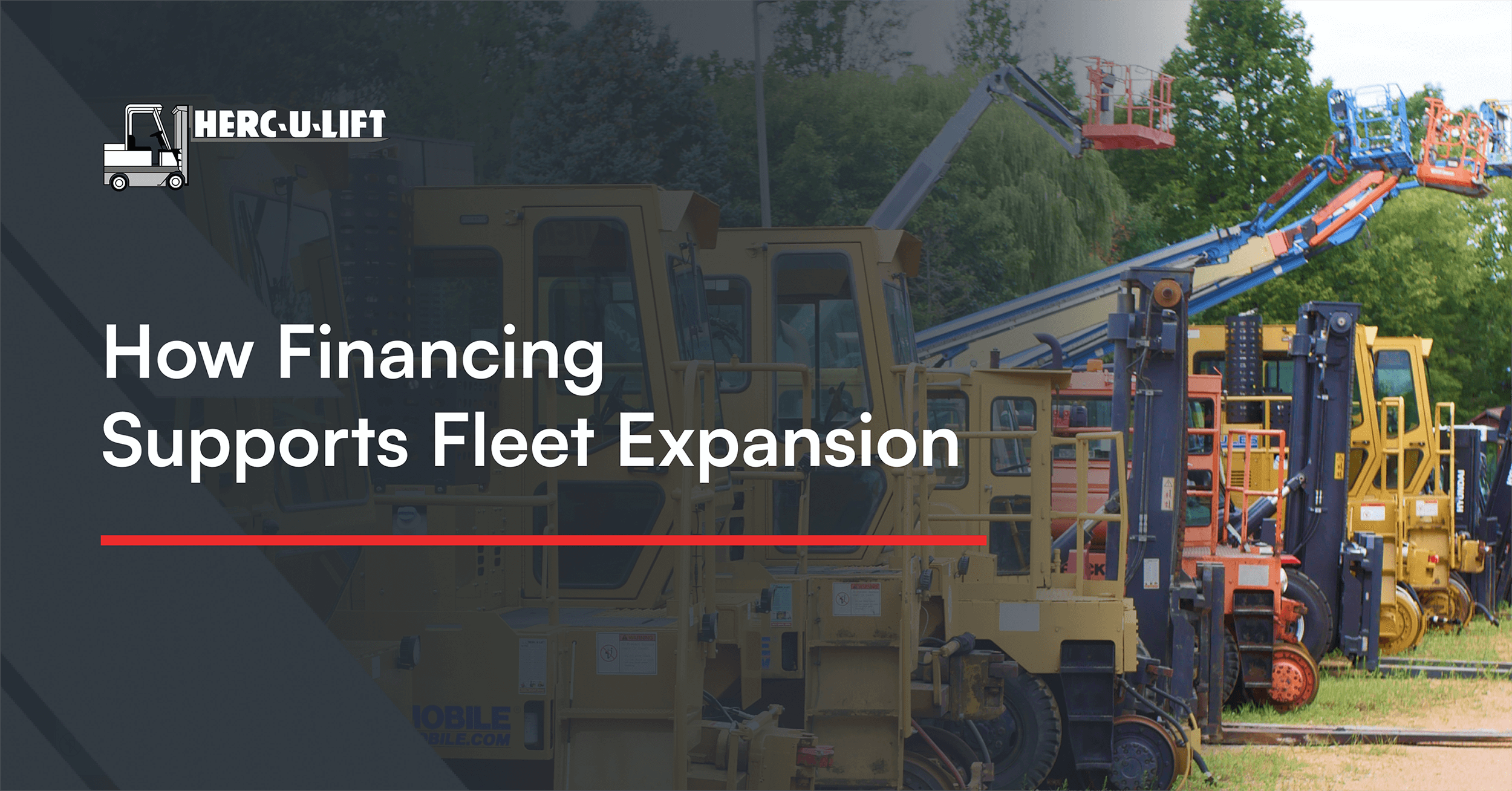
Expanding a heavy equipment fleet can be expensive. Like, really expensive.
Let’s face it: a single piece of quality equipment represents a major investment. Now multiply that by the number of machines you need to stay competitive. The grand total can easily make most small to mid-sized contractors break into a cold sweat.
But here’s the thing. Most successful businesses don’t grow by draining their bank accounts. Instead, they make smart financial moves that preserve liquidity while still expanding their capabilities. That’s where financing programs come in. They allow companies to scale responsibly and compete for bigger projects without choking their cash flow.
In this article, we’ll talk about how different financing programs work. We’ll tell you about their advantages and how they can support fleet growth. If you’re aiming to supercharge your business operations, read up and learn how to achieve that without putting your budget in a chokehold.
The Financial Barrier: Why Buying Outright Isn’t Always Smart
Picture this: you’ve got a great opportunity to bid on a project that could transform your business. The only problem? You need an additional excavator and telehandler to do the job. Each one costs around $80,000 to $200,000, depending on size, brand and attachments.
Many businesses quickly learn the hard way that having a yard full of shiny machines can leave them strapped for cash. Tying up that much capital in iron can make it difficult to afford payroll, fuel, maintenance, insurance, and other essential expenses.
The smartest companies in this industry understand that growth isn’t about how much cash you can spend. It’s about how efficiently you can deploy the resources you have. Equipment financing lets you expand your fleet without emptying your accounts. Your business stays strong, even in tough times.
And trust us! In the heavy equipment world, unexpected challenges always hit.
Understanding Equipment Financing Programs
Equipment financing is a loan or lease specifically designed for purchasing machinery and heavy equipment. Unlike a generic business loan, this is structured around the equipment itself. The machine often serves as collateral.
There are 3 main types of equipment financing programs, namely:
Equipment Loans
A bank or financing company lends you the money. You pay them back in monthly terms over 3 to 7 years. Once the term ends, you get to own the machine. The lender can repossess the equipment if you stop paying.Best for: Excavators, wheel loaders, and other core equipment that stay in your fleet for years.
Operating Leases
This setup works much like a long-term rental agreement. You don’t own the equipment but you get full use for 1 to 3 years. You return the equipment or choose to renew when the lease ends. Some providers may even allow you to upgrade to a newer model.Best for: Temporary fleet expansion when you land a big contract or short-term project.
Finance Leases
Sometimes called capital leases, this falls somewhere in between the two. Monthly payments are typically higher than operating leases but lower than loans. You lease the equipment long-term. You can take full ownership after the lease by paying the set residual value.Best for: Companies planning to own machines through smaller payments.
Financing programs are often offered by banks, independent lenders, or by manufacturers. Interest rates, term lengths, and residual values vary widely. So, read the fine print. Also, pay attention to prepayment penalties and maintenance requirements on leases.
How Financing Supports Fleet Expansion Strategically
Financing helps level up your business in 4 smart ways:
Enables Gradual Growth
Instead of making a massive purchase, you can gradually scale your fleet. For example, you can start by financing 2 skid steers this quarter. After a year, you then get a new excavator. It’s a more controlled way to expand.Preserves Working Capital
Cash is oxygen for any construction business. Financing keeps your working capital available for fuel, payroll, maintenance and insurance instead of locking it all into new equipment. Plus, you need the cash flow buffer when clients pay late (because they always do).Improves Competitiveness
More equipment means more capacity. You can complete projects faster and take on larger contracts. When competing with larger firms, financing lets you bid confidently while staying within budget.Predictable Budgeting
Fixed monthly payments make financial planning way easier. You know exactly what your equipment costs each month. This helps you forecast cash flow better.Real-World Example:
A mid-sized construction firm with 5 loaders obtains financing for 3 more. Instead of spending $600,000 upfront, the cost is spread over 5 years. The result? A bigger fleet, more job capacity, and steady cash flow for daily operations. The monthly payment is manageable within their operational budget. The increased capacity allows them to bid on new projects that generate significantly more revenue.
That’s how financing turns vision into reality.
Leasing vs. Financing: Choosing the Right Model for Your Fleet Goals
Leasing and financing meet different needs. The best pick depends on your business’ equipment usage and project duration. Here are the advantages of each option:
To decide which option is best, consider the following:
How often will you use this equipment?
Core machines that run daily are better candidates for financing and ownership. Specialized equipment you only need occasionally might be better leased.
What’s your technology refresh strategy?
If you do high-profile commercial work where clients expect the latest equipment, leasing keeps you current. If you’re more focused on reliability and ROI over time, ownership through financing makes better sense.
What are your tax considerations?
We’ll dig deeper into this in the next section. For now, know that your tax situation might favor one approach over the other. Talk to your accountant. Ask about which structure provides better tax advantages for your specific circumstances.
What’s your equipment replacement cycle?
Financing is the way to go if you typically run equipment for 7-10 years before replacing it. Leasing aligns better with your strategy if you upgrade every 3-4 years.
No single approach works for everyone. Sometimes, it’s a good idea to go with both options. For example, you can finance your core fleet equipment for long-term ownership and lease supplementary machines for short-term needs.
Tax and Accounting Advantages of Financing Programs
Here’s where financing gets even more interesting! It’s not just operationally smart. It’s also financially strategic.
When you finance or lease equipment, portions of your payments may qualify as tax-deductible expenses. If structured correctly, interest, depreciation, and lease payments can reduce your taxable income.
In the United States, Section 179 offers valuable benefits for contractors. This provision allows businesses to deduct the full price of qualifying equipment in the year it’s purchased. For 2025, you could deduct up to $1,250,000 in equipment purchases, with phase-out thresholds at $3,130,000. That’s a massive immediate tax benefit that can significantly reduce your tax liability. Other countries may offer similar incentives, though rules usually vary by jurisdiction.
Always consult a qualified accountant. Ask about their familiarity with heavy equipment financing and the specific tax implications for your business structure. They’ll ensure you’re maximizing deductions legally. With their advice, you can save a significant amount. The consultation fee often pays for itself many times over.
Financing Programs from Manufacturers and Dealers
You don’t always have to go through a bank or a lender. Major equipment manufacturers and dealers often offer their own financing arms, such as:
MyCatFinancial
John Deere Financial
Komatsu Financing
Volvo Heavy Equipment Financing
Some of the advantages from these OEM-backed programs are:
✔ Lower rates for loyal customers.
Dealers usually provide promotional interest rates for loyal customers or bulk buyers.
✔ Bundled maintenance plans.
Some programs include maintenance or extended warranty packages, simplifying ownership costs.
✔ Seasonal payment flexibility.
You may be able to skip or reduce payments during traditionally slow months (such as winter season). Traditional banks rarely offer this kind of benefit.
✔ Faster approval.
Dealer-backed financing is usually straightforward. It requires less paperwork than traditional bank loans.
✔ Tailored to industry needs.
These programs are run by people who understand the realities of equipment-heavy industries. They speak your language and that can make a big difference.
That said, don’t assume dealer financing is always your best option. Compare rates and terms from multiple sources, including traditional lenders and independent equipment financing firms.
Avoiding Common Financing Mistakes
Equipment financing can do more harm than good if used incorrectly. Here are some common mistakes we see companies make repeatedly:
Overleveraging
This is the big one. It’s always tempting to expand fast because of financing. However, too much debt can cripple your cash flow. So, match your financing pace to your projected revenue and job pipeline. Expand strategically.Ignoring Depreciation
Heavy equipment loses value over time. A $150,000 machine you finance today might only be worth around $80,000 five years later. Factor that depreciation into your long-term planning. Don’t treat equipment as a fixed asset. Always consider resale value and lifespan before committing.Unrealistic Payment Terms
Low monthly payments can be tempting. So, do the math before diving headfirst! A $100,000 loan at 6% over 5 years will cost you about $116,000 total. Stretch it to 7 years, and you’ll pay around $124,000. That extra $8,000 may not sound like much. But multiply it across a fleet and you’re talking real money.Skipping Pre-Approval
Don’t wait until after you’ve landed a project to apply for financing. Get pre-approved with multiple lenders. This strengthens your negotiation power and lets you move quickly when opportunities arise.Before signing a financing deal, conduct a proper cost-benefit analysis. Calculate the true total cost including interest. Project the revenue the equipment will generate. Factor in maintenance, insurance, and operator costs. Make sure the numbers actually work before committing. A bit of math upfront can save you years of regret.
Case Study: How Financing Fueled a Mid-Sized Contractor’s Growth
Here’s an example scenario:
A mid-sized construction firm in the Midwest was stuck. Owning 5 excavators and 1 telehandler limited them to just 2 big projects at a time. When a large municipal contract came along, they chose dealer financing instead of draining their cash to buy new machines.
Through a 5-year finance lease, they added 2 telehandlers and another excavator. Within a year, the company experienced these benefits:
• Fleet capacity increased by 30%.
• Project turnaround times improved by 25%.
• Revenue grew by 18%.
• Cash reserves stayed healthy enough to cover operational expenses and emergency repairs.
By the second year, the company was bidding (and winning) larger contracts. To sum it up: they didn’t “buy” growth. They financed it strategically.


Conclusion: Financing as a Growth Catalyst, Not Just a Payment Plan
Here’s what I want you to take away from all this: equipment financing isn’t just about making big purchases easier. That’s the surface-level benefit. The real value runs much deeper.
Smart financing is about leveraging capital efficiently. It lets you grow faster and stay flexible. Successful contractors know this. They use financing to expand fleets, win bigger jobs, and stay ahead of the competition. Monthly payments aren’t a burden. They’re an investment in long-term growth.
Whether you’re getting your first machine or upgrading to a full fleet, the right financing plan can fuel sustainable success. Talk to your dealer or advisor. Compare options and choose terms that fit your business goals. The right plan won’t just help you buy equipment. It’ll help you build a stronger, more profitable company.

 →
→