Telehandler vs Forklift: Key Differences You Need to Know Before Choosing
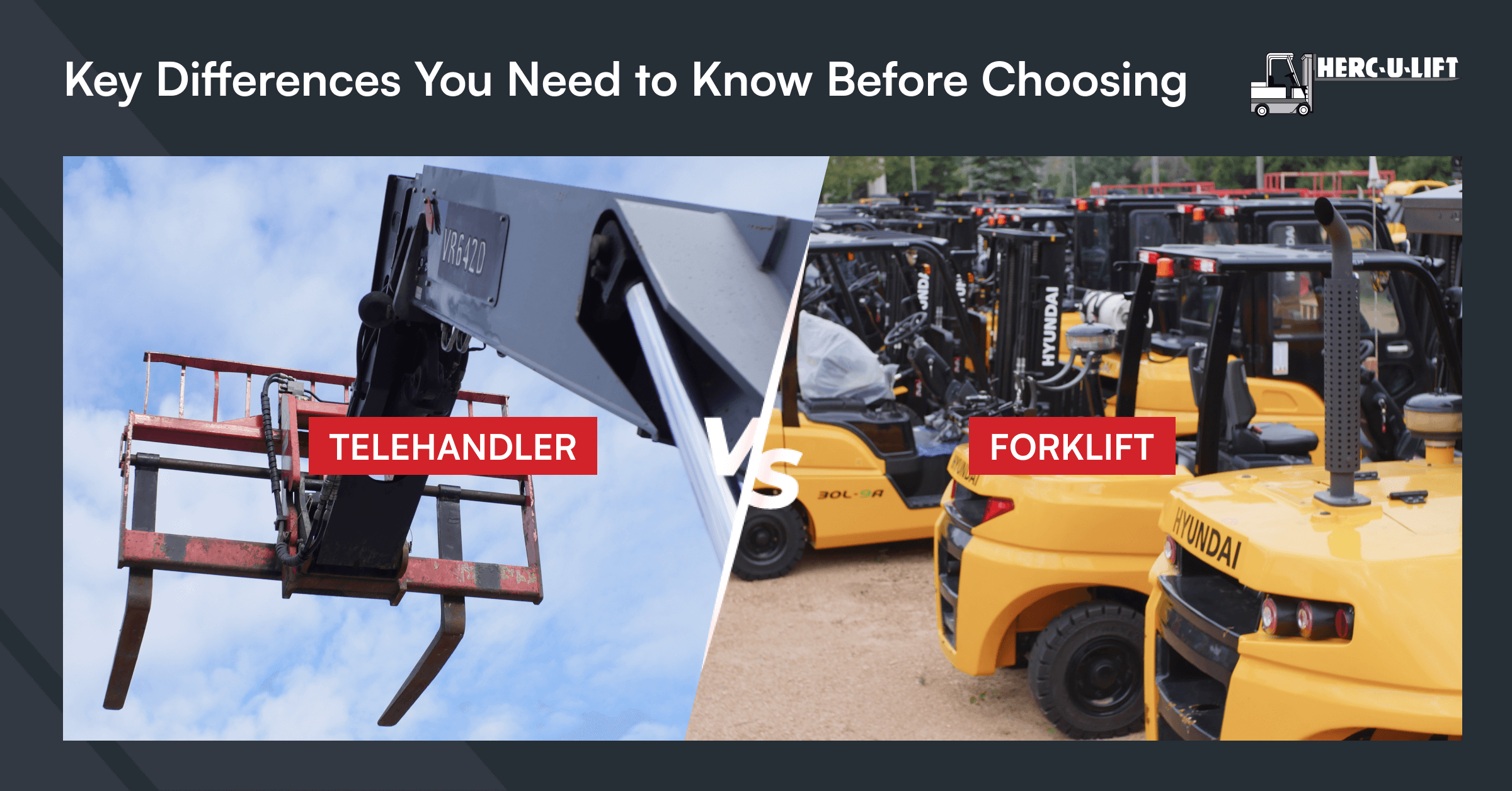
We’ve seen it many times. A contractor arrives with the wrong lifting equipment and a three-day job turns into a week-long headache.
Choosing between a forklift and a telehandler isn’t about what’s available at the rental yard. It’s about matching the machine to the job. Yes, both lift and move loads, but the similarities stop there. Their designs, capabilities, and ideal environments differ. A forklift is a precision tool for specific tasks. Meanwhile, a telehandler is more of a Swiss Army knife on wheels.
In this guide, we break down the functional, mechanical, and operational differences between these two machines. Whether you’re buying, renting, or just trying to figure out what your site actually needs, we’re here to help. With years of industry experience, our perspective comes from real job sites and certified equipment operators. Plus, OSHA regulations guide our recommendations. Rest assured, our tips are rooted in what truly works in the field.
What Is a Forklift?
A forklift lifts loads vertically and transports them horizontally over short distances. You’ll find them in warehouses, factories, and distribution centers. If materials need to be stacked or moved in a controlled setting, they get the job done.
The two main types of forklifts are:
Both have the same standard features, including:
• an upright mast at the front.
• a fork carriage that slides up and down.
• a hydraulic lift system that moves the load.
Meanwhile, the rear weight acts as a counterbalance. It prevents the machine from tipping forward when you’re carrying materials.
Forklifts fall under OSHA 29 CFR 1910.178. Operators need proper certification, plus training in load handling and daily inspection checks. These standards exist for good reason. Besides, accidents happen because of improper forklift use.
What Is a Telehandler?
A telehandler is a mix of a forklift and a crane. They’re usually found on construction sites, built to lift materials to higher elevations. Case in point, a telehandler is best if you’re lifting roofing materials to the third floor. Or placing a pallet of bricks on scaffolding 40 feet up.
Key Design Differences
Performance and Application Comparison
Safety Considerations
Cost Comparison
Choosing the Right Equipment: Decision Factors
Choose a forklift if:
• You work primarily indoors.
• You’re stacking pallets in a warehouse environment.
• Space is limited.
• Maneuverability matters.
• The maximum lift height is under 20 ft.
• You’re mostly working on stable surfaces.
• Budget constraints favor lower upfront and operating costs.
Choose a telehandler if:
• You need to reach heights over 20 ft.
• Work involves outdoor mobility.
• You primarily operate on rough terrain.
• You need to reach over obstacles or place loads at angles.
• Multiple attachment options would increase productivity.
• One versatile machine is preferable to multiple specialized units.
Here’s a comparative table to give you a quick overview of how these two machines stack up:
Features | Forklift | Telehandler |
|---|---|---|
Max Reach | ~20 ft | 35 to 50+ ft |
Terrain Capability | Smooth/moderate | Rough/outdoor |
Attachments | Limited | Extensive |
Maneuverability | High in tight spaces | Lower indoors, higher outdoors |
Operator Skill Level | Moderate | Advanced |
When in doubt, consult with a certified equipment dealer or site engineer. They can help assess your specific requirements. They’ll recommend solutions based on factors like duty cycle, load types, and your budget.
Common Misconceptions
A lot of misunderstandings get passed around from site to site. Here are two of the biggest misconceptions that come up again and again in the field:
“A telehandler is just a big forklift.”
This is false. The boom design fundamentally changes how the machine operates. A telehandler’s ability to extend forward and lift at angles makes it mechanically and operationally distinct. While they both move materials, that’s where the similarity ends.
“Forklifts handle outdoor terrain equally well.”
Only rough-terrain forklifts can work outdoors effectively. That said, even those have limitations compared with telehandlers. Standard warehouse forklifts on muddy or uneven sites are accidents waiting to happen. The smaller tires, lower ground clearance, and weight distribution aren’t designed for serious outdoor work.
Maintenance and Inspection Tips
You mostly focus on mast hydraulics with forklifts. Leaks or sluggish responses indicate problems. Check tire wear patterns, which reveal alignment issues or operator habits that need correction. Electric models need electrical system checks and battery maintenance. Forklift brakes deserve special attention, too. Besides, they work harder than most people realize.
With telehandlers, you will need to inspect boom sections for cracks, wear, or damage. You also have to check stabilizers and hydraulic systems. They are critical safety components. Examine hydraulic hoses throughout the boom assembly. Verify that coupling systems engage properly with different attachments. The complexity of telehandler systems means more potential failure points.
In any case, keeping detailed maintenance records is important. Your maintenance history is crucial for troubleshooting and evaluating equipment reliability. They’re also useful in passing safety audits. So while preventive maintenance schedules vary by manufacturer, they should align with OSHA and ANSI recommendations.
Real-World Examples or Case Study
Scenario 1: A mid-sized warehouse used a fleet of forklifts to manage daily pallet movements. The machines were highly efficient with narrow aisles and repetitive lifts. Operator fatigue was also minimal.
Scenario 2: A construction site needed roofing panels lifted to varying heights across multiple floors. Telehandlers easily outperformed forklifts. They handled longer reaches, uneven terrain, and heavier loads with fewer trips.
The Bottom Line: These examples, drawn from real fleet operations and site manager insights, show why choosing equipment based on application matters far more than comparing specs on paper. Ultimately, matching the machine to the environment is what truly drives efficiency.
Forklifts excel in indoor stacking. Meanwhile, telehandlers dominate outdoor lifting and angled placement.
Conclusion
Telehandlers and forklifts are both essential machines. But they serve very different roles. Using one in the wrong setting leads to inefficiency and even danger.
As you decide which heavy equipment is best, consider these 3 factors:
• Site conditions.
• Load requirements.
• Height or reach needs.
Indoor warehouse operations with predictable conditions? Forklifts are your answer. Outdoor construction with variable elevations and challenging terrain? Telehandlers make sense. Projects with mixed requirements might justify having both available.
The insights here come from certified equipment trainers and field operators with decades of experience. To sum up, pick the right machine and you work faster with less risk. Don’t let availability or rental cost drive your decision. Focus on what the job and safety requirements call for. Everything else (such as cost, training, and maintenance) follows from those fundamental factors.


 →
→