Genie Lift Parts Guide: The Most Common Components That Need Replacement
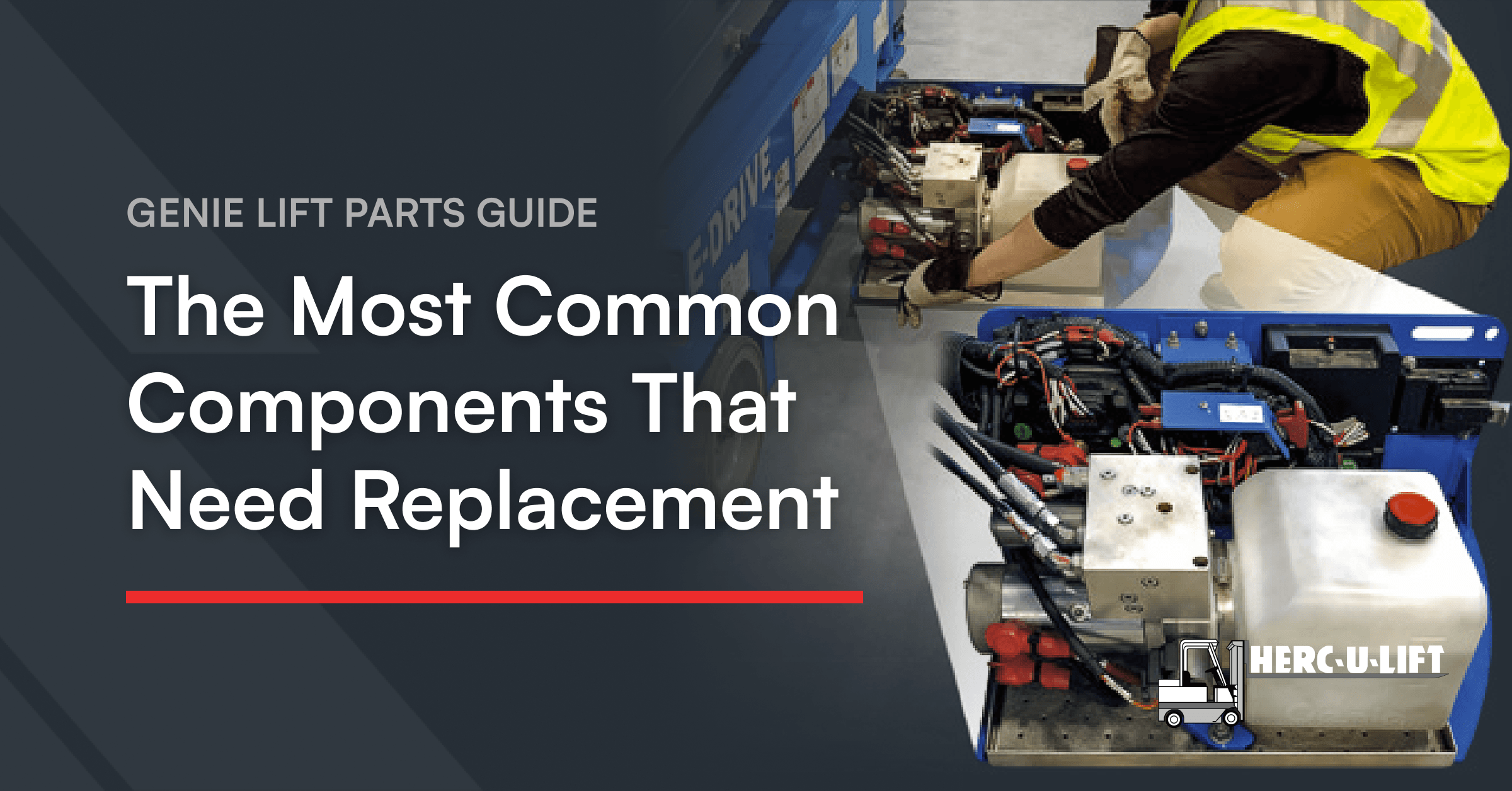
Genie aerial lifts are among the most widely used machines for elevated work. They’re often found in construction, industrial, and warehouse environments. From indoor facility upkeep to large-scale jobsites, these lifts allow operators to reach high work areas safely.
The brand’s product lineup includes scissor lifts, articulating boom lifts, telescopic boom lifts, and vertical mast lifts. Like any piece of heavy equipment, Genie lifts experience wear with regular usage. Environmental conditions, heavy workloads, and routine aging can all contribute to component deterioration. Meanwhile, some parts naturally wear faster than others.
Knowing which Genie lift parts wear out fastest helps businesses optimize their maintenance strategies. Tracking these high-replacement components allows fleet managers to:
• Minimize unexpected downtime
• Control repair costs
• Extend equipment lifespan
• Improve fleet reliability
• Ensure operator safety
In this guide, we explore the most frequently replaced Genie aerial lift parts. We also tell you about common maintenance concerns and practical strategies for keeping lift equipment operating efficiently.
Overview of Genie Lift Equipment
Genie is one of the leading manufacturers of aerial work platforms. Their lineup includes:
Scissor Lifts
Genie scissor lifts provide vertical access for maintenance, installation, and material handling tasks. They’re widely used indoors and outdoors, depending on the model.Popular Models: GS-1930, GS-2669 RT, GS-3246, GS-4069, GS-5390
Articulating Boom Lifts
Genie articulating boom lifts use multiple pivot points. This feature allows operators to reach difficult work areas.Popular Models: Z-34/22, Z-45 XC, Z-60 FE, Z-62/40, Z-80/60
Telescopic Boom Lifts
Genie telescopic boom lifts provide extended horizontal reach and elevated access for construction and industrial projects.Popular Models: S-40 HF, S-60 XC, S-65 XC, S-80 J, S-125
Vertical Mast Lifts
Genie vertical mast lifts are compact machines. They are commonly used in warehouses and retail facilities.Popular Models: GR-12, GR-15, GR-20, GR-26J, AWP-30S
Note: While designs vary by lift type, they share the same foundational systems: hydraulic cylinders, electrical controls, and structural wear components.
Key Systems in Genie Aerial Lift Equipment

Most Common Genie Lift Parts That Require Replacement
Certain Genie lift parts consistently experience more wear than others. These components are exposed to repeated movement, heavy loads, and environmental conditions. Conducting routine inspections help maintenance teams identify wear early. As a result, they can schedule repairs before equipment failures occur.
Genie Scissor Lift Parts That Wear Out Most Often
Scissor lifts are among the most heavily utilized aerial work platforms. Because of their design, several components experience consistent wear.
Genie Boom Lift Maintenance and Common Replacement Parts
Boom lifts have additional mechanical and hydraulic systems compared to scissor lifts. Because of their extended reach and articulation capabilities, boom lifts often require specialized maintenance.
Boom Lift Cylinders
Boom sections rely on hydraulic cylinders for movement and positioning. These components operate continuously during normal use. Seal wear and contamination eventually affect performance. Pressure loss may also reduce responsiveness and lifting efficiency.Rotation Motors
Rotation motors allow the upper structure to rotate smoothly during operation. They are used constantly when positioning the boom. Heavy usage may later reduce rotational precision and responsiveness.Hydraulic Hoses
Boom lifts typically contain numerous hydraulic hoses routed throughout the machine. These hoses are exposed to movement, vibration, weather and abrasion.Articulation Joints
Multiple articulation joints allow the boom to move through a wide range of positions. These components are subjected to repeated movement and loading cycles. Excessive wear can reduce accuracy and place additional stress on surrounding parts.How Boom Lift Maintenance Differs
Boom lifts generally involve more complex hydraulic routing, articulation points, and mechanical systems than scissor lifts.
That said, maintenance programs often require more detailed inspections. They should also involve greater focus on hydraulic system health.
Signs Your Genie Lift Parts Need Replacement
Recognizing early warning signs can help maintenance teams address issues immediately.
Preventive Maintenance Tips for Genie Aerial Lifts
Preventive maintenance remains one of the most effective ways to reduce downtime. Operations that implement them also control repair costs better.
Consider these proactive maintenance strategies:
Maintenance Activity | Purpose | Recommended Frequency |
Pre-Operation Inspection | Identify visible damage, leaks, loose components, and safety concerns. | Daily or before each use. |
Hydraulic System Inspection | Monitor system performance and detect leaks. Identify potential hydraulic issues early. | Daily and during scheduled service. |
Hydraulic Fluid and Filter Service | Maintain hydraulic efficiency. Reduce wear on pumps, cylinders, and valves. | Per manufacturer service intervals. |
Lubrication of Moving Components | Reduce friction and wear on pins, bushings, joints, and pivot points. | Scheduled maintenance intervals. |
Electrical System Diagnostics | Detect sensor, wiring, battery, and control system issues before failures occur. | Periodically during preventive maintenance. |
Tire Inspection | Ensure machine stability, traction, and safe operation. | Daily and during scheduled maintenance. |
Structural Component Inspection | Verify the integrity of booms, platforms, guardrails, and other structural components. | Scheduled maintenance intervals. |
Maintenance Record Updates | Track service history and support compliance. Improve fleet management decisions. | After every inspection or service event. |
Choosing the Right Replacement Genie Lift Parts
The right parts help keep equipment operating efficiently. They can improve reliability and support safe performance. Proper parts selection may also reduce repair expenses in the long run.
Before purchasing any part, consider these factors:
Frequently Asked Questions About Genie Lift Parts
To be sure, following the manufacturer’s maintenance recommendations. This is the best way to maximize equipment reliability and lifespan.
Compatibility and product quality should always be verified before installation. Businesses should work with trusted suppliers and qualified technicians when evaluating replacement options.
Businesses should evaluate supplier expertise, parts availability, and product quality before making a purchase decision.
Conclusion
Genie lifts play an essential role in construction sites, industrial maintenance, and warehouse operations. Like any heavily used equipment, these lift machines require ongoing maintenance. Periodic component replacement is also essential to operate safely and efficiently.
Understanding which Genie lift parts commonly wear out allows maintenance teams to plan repairs, reduce downtime, and improve equipment reliability. Hydraulic components, electrical controls, safety devices, tires, and structural wear items should all receive regular inspection.
By implementing proactive maintenance practices and sourcing quality replacement parts, organizations can extend equipment lifespan and maximize the long-term value of their Genie aerial lift fleet.