The Warehouse Manager’s Guide to Equipment Spare Parts
In most warehouses, equipment performance is measured by uptime.
But here’s the thing: uptime is rarely just about the machines.
Ultimately, it boils down to how well your operation is prepared.
Even with a maintenance program in place, repairs can stall if critical parts aren’t available when needed.
A simple issue that should take minutes to fix can turn into hours (or even days) of downtime.
This is where effective planning makes a measurable difference.
Instead of reacting to breakdowns, warehouses that plan ahead improve maintenance efficiency. As a result, they manage to control repair costs and keep operations running smoothly.
This guide breaks down how to build a solid spare parts inventory strategy. With our tips, you can support faster repairs and make better decisions for your heavy equipment.
What is a Warehouse Spare Parts Inventory?
A warehouse spare parts inventory is more than a storage area for replacement components. It’s a strategic system designed to support maintenance speed and operational continuity. It ensures that maintenance teams can respond to equipment issues without being dependent on external delays.
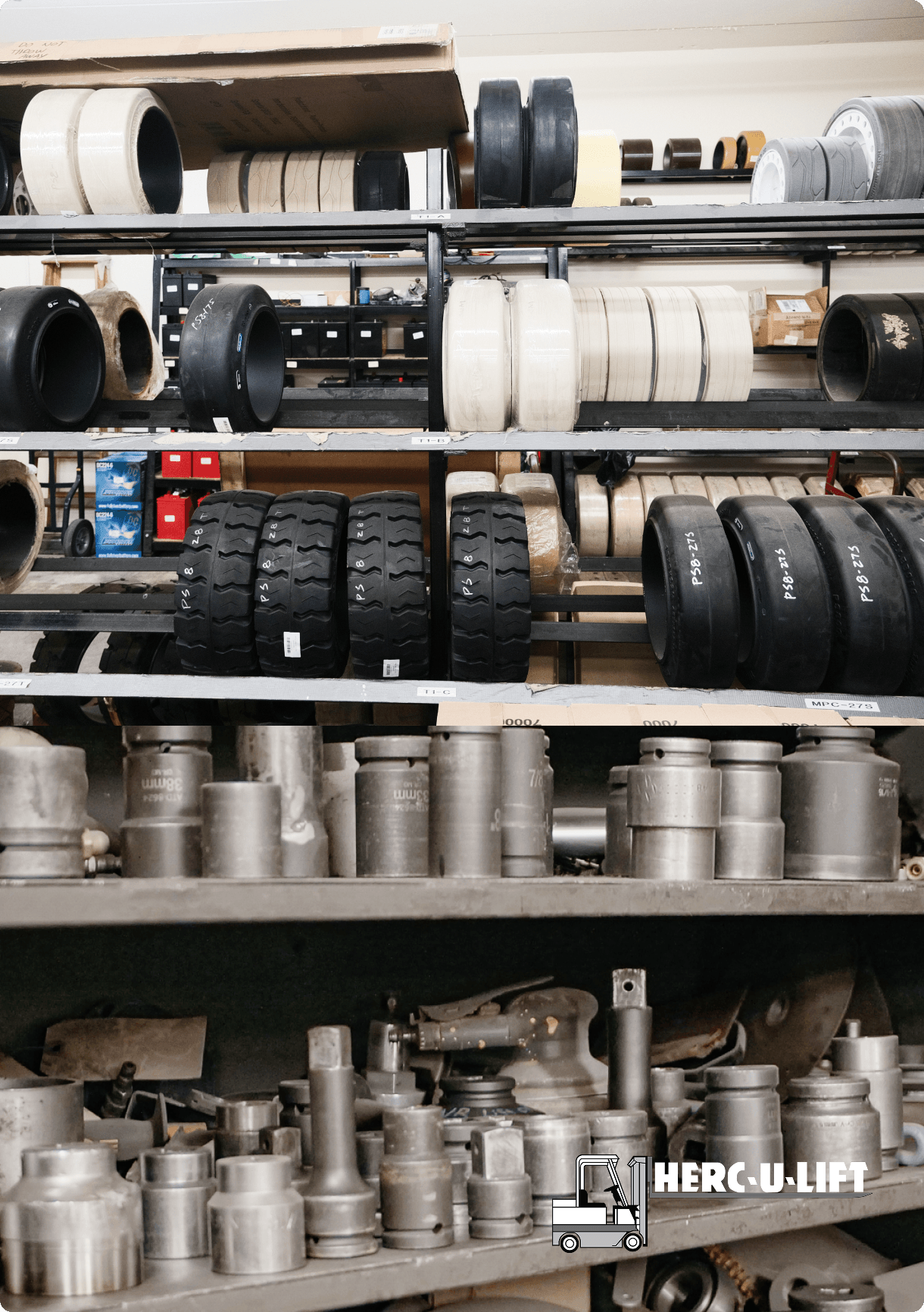
Some of the most common spare parts found here are:
• Hydraulic seals
• Filters
• Lift chains
• Bearings
• Electrical sensors
• Tires
Beyond the hardware, it also operationalizes:
• Defined stocking levels
• Usage tracking
• Reorder processes
• Clear organization systems
In high-performing warehouses, spare parts inventory is treated as an extension of regular equipment checks. It’s not a passive stockroom. Instead, it’s actively managed and regularly reviewed. More importantly, it’s aligned with how equipment is actually used on the field.
Why Spare Parts Inventory Matters in Warehouse Operations
Spare parts inventory directly influences how stable and predictable your operation is.
Without it, maintenance becomes reactive. Repairs take longer and become harder to control. With it, you gain the ability to plan maintenance effectively. You also avoid disruptions that directly impact productivity.
More importantly, it reduces dependence on external factors like supplier delays or shipping issues. This gives warehouse managers more control over outcomes.

Common Warehouse Equipment That Requires Spare Parts Planning
Heavy equipment all rely on components that wear over time.
The key is understanding how each type of equipment is used and what failures mean in terms of operational impact.
High-utilization equipment requires more aggressive spare parts planning. Meanwhile, specialized equipment may require planning based on lead times rather than frequency of use.
A balanced strategy accounts for both.
Identifying Critical Spare Parts for Your Warehouse
Not all parts deserve shelf space. Treating them equally is where many operations go wrong.
Planning can be done easier when you identify failure points that disrupt operations, not just components that wear out.
A part that fails often but is easy to replace and readily available may not need to be stocked in large quantities. On the other hand, a component with a long lead time (even if it fails less frequently) can bring operations to a standstill when it does.
For example:
• A hydraulic hose might be easy to source locally within hours
• A control module or sensor may take days to arrive
• A lift chain failure could immediately sideline a critical forklift
The most effective approach is to categorize parts into critical (must stock), important (limited stock), and non-critical (order as needed).
Spare Parts Prioritization Guide
To make prioritization more practical, here’s a sample of how common warehouse spare parts can be evaluated based on essential factors:
Part Type | Failure Frequency | Lead Time | Operational Impact | Stocking Priority |
|---|---|---|---|---|
Hydraulic Seals | High | Short-Medium | Medium | High |
Filters | High | Short | Low-Medium | High |
Forklift Tires | Medium-High | Medium | Medium | High |
Lift Chains | Medium | Medium-Long | High | Critical |
Electrical Sensors | Low-Medium | Long | High | Critical |
Hydraulic Pumps | Low | Long | Very High | Critical |
Wheels (Pallet Jack) | High | Short | Low | Medium |
Step-by-Step Guide to Building a Warehouse Spare Parts Inventory
Best Practices for Forklift Spare Parts Planning
These practices help keep forklifts running consistently:
• Scheduled replacement cycles– Don’t wait for parts to fail. Set replacement intervals for high-wear components like filters, seals, and chains based on usage hours, not calendar dates.
• Tracking wear components– Regularly monitor wear parts like chains, tires, and forks. Tracking condition and replacement frequency helps you anticipate failures. It also highlights patterns that may point to deeper operational issues.
• Maintaining hydraulic systems– Small hydraulic issues escalate quickly. Inspect hoses, seals, and pumps frequently to address leaks or pressure drops early.
• Monitoring tires and batteries– Tires impact stability and handling. Batteries determine uptime, especially in electric fleets. Worn tires and weak batteries can take equipment out of service faster than expected. So, stay ahead with regular checks and ready replacements.
With proper planning, you can prevent sudden equipment failure.
Using Technology to Manage Equipment Parts Inventory
Technology can strengthen your equipment parts management process.
A computerized maintenance management system (CMMS), for example, allows you to:
- • Track which parts are used on which machines
- • Identify repeat failures
- • Forecast future demand based on usage trends
Barcode systems reduce human error and improve accountability. Instead of guessing stock levels, you get real-time visibility.
More advanced operations are now using predictive maintenance tools. This tech analyzes usage patterns and equipment data to anticipate failures before they happen.
Balancing Inventory Costs With Operational Reliability
Every warehouse faces the same tension: cash tied up in inventory vs risk of downtime.
The mistake is treating this as a cost problem only. Because in reality, it’s a risk management decision.
For example:
- • Overstocking low-cost, high-risk components may be justified
- • Understocking critical parts to “save money” can result in far greater losses
The right balance depends on: - • How critical the equipment is to operations
- • How quickly parts can be sourced
- • The cost of downtime per hour
When viewed through that lens, spare parts inventory becomes less about expense. The focus is more about protecting operational continuity.
Working With a Reliable Equipment Parts Supplier
Operational reliability improves when your supplier functions like a trusted partner, not just a mere vendor.
A good supplier will help you identify correct parts quickly and avoid ordering errors. Plus, they’ll readily provide technical guidance. More importantly, they guarantee consistent lead times, clear communication, and support during urgent situations.
Common Mistakes in Spare Parts Inventory Management
• Overstocking based on assumptions– Stocking large quantities “just in case” ties up capital. It often leads to unused or obsolete parts.
• Ignoring usage data– Without tracking which parts are actually used, inventory decisions become guesswork instead of strategy.
• Underestimating lead times– Assuming parts will always be available quickly can lead to unexpected delays.
• Lack of standardization– Using multiple equipment models with different parts increases complexity and inventory requirements.
• Poor inventory visibility– Not knowing what’s in stock (or where it is) can delay repairs just as much as not having the part at all.
Avoiding these mistakes requires consistent processes, regular reviews, and a shift from reactive to planned inventory management.
Frequently Asked Questions About Warehouse Spare Parts Inventory
Manual tracking can work in smaller operations, but it becomes unreliable as complexity increases. Digital systems provide accuracy and better decision-making.
Conclusion
A well-planned spare parts inventory is a core part of operational strategy.
When the right parts are available at the right time, maintenance becomes predictable. Costs are controlled. Equipment stays in service where it belongs.
The difference comes down to planning.
Warehouses that take a proactive approach operate with greater consistency. As they identify critical components, track usage, and maintain reliable supply channels, they experience fewer disruptions.
In high-demand environments where every hour counts, spare parts planning isn’t optional. It’s essential to keep your business moving.



 →
→