Bi-Modal Rail Car Movers: How They Work On and Off Tracks
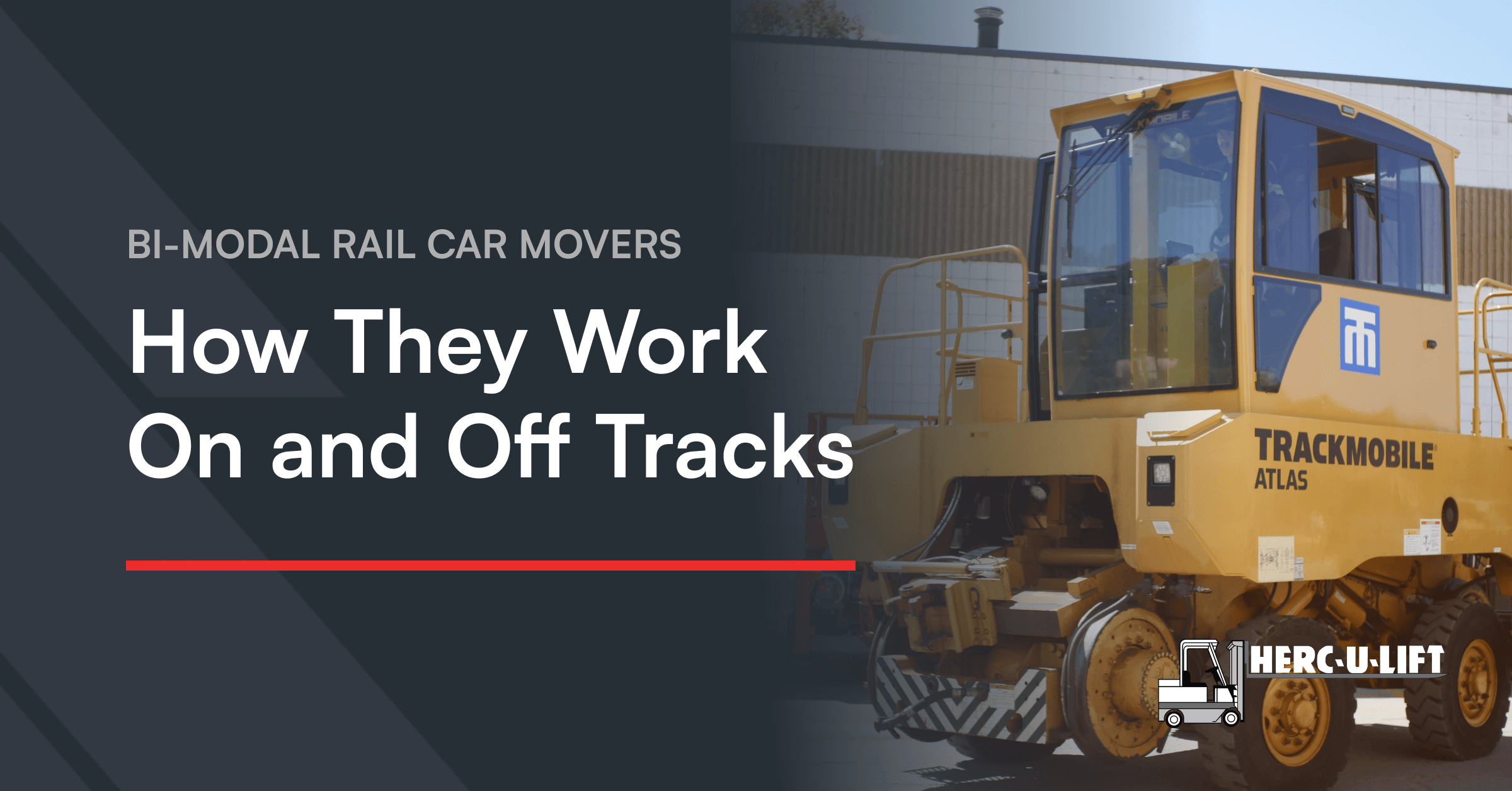
Picture this: A heavy equipment rolls off railroad tracks. It crosses a parking lot. Then it climbs back onto the rails like it’s nothing.
Well, that’s a bi-modal rail car mover in action.
If you run a rail yard, warehouse, or any facility that deals with both tracks and roads, this machine might be your new best friend.
Movers roll like trucks and run like locomotives. They also save operators from wasting hours repositioning equipment. In a way, they’re the “hybrid athletes” of rail yard equipment. In fact, they’re engineered for facilities that demand performance on pavement and steel rails.
This article breaks down everything you need to know about bi-modal rail car movers. We’ll discuss how they work, why they matter, and who uses them. Furthermore, we tell you when it makes sense to buy or rent one.
What Are Bi-Modal Rail Car Movers?
A bi-modal rail car mover, A.K.A. dual-mode railcar mover, is a heavy machine that operates both on standard railway tracks and on regular paved surfaces. If you’re trying to understand how railcar movers work, bi-modal units provide the clearest example. Besides, they operate seamlessly in both environments.
The term “bi-modal” literally means “two modes.” These machines aren’t just modified trucks with train wheels slapped on. They’re movers built to handle the unique demands of both environments, making them ideal as road and railway logistics solutions.

How Bi-Modal Rail Car Movers Work on Tracks
Once the rail gear is deployed, the machine’s weight distribution shifts. The rubber tires may lift slightly off the ground or remain in light contact, depending on the unit’s model and design. The rail wheels now bear the primary load and provide guidance along the track. Modern movers generate thousands of pounds of drawbar pull. That’s more than enough to move strings of loaded railcars that would make a forklift weep. This creates safe, predictable movement essential for heavy loads and tight schedules.
How They Work Off Tracks
Here’s where bi-modal movers really earn their keep. Unlike traditional rail-only movers, bi-modals can drive using standard rubber tires across the yard, through paved sections, or between disconnected tracks. They’re true on and off track machinery, giving operators the flexibility to position the mover where it’s needed. This approach supports hybrid rail transport and keeps operations flowing even when track layouts are complex or spread apart.

Key Advantages of Bi-Modal Systems
Common Use Cases and Industries
Bi-modal movers thrive in environments where rail and road overlap. You’ll commonly see them in:
Rail-served warehouses
Are prime territory. These facilities often receive inbound railcars of raw materials or goods, then need to spot those cars precisely at loading docks. The ability to move cars between multiple dock positions and then reposition the mover itself for the next job makes it ideal.Manufacturing & distribution plants
With rail service love bi-modal movers. Consider an automotive parts plant that receives steel coils by rail several times a week. The mover can pull the loaded cars from the main line connection, spot them at the unloading facility, then move the empties to a separate storage track. All while being available for non-rail work around the facility if needed. Plants producing products that ship by rail (chemicals, aggregates, grain, etc.) benefit similarly on the outbound side.Ports & intermodal terminals
Represent massive use cases, though they often graduate to larger equipment due to volume. Still, smaller terminals with moderate traffic find dual-mode movers useful for container car positioning, connecting different yard areas, and providing backup capacity during peak periods.Maintenance-of-way operations
Might be the unsung hero application. Rail maintenance crews need equipment that can access work sites scattered across a rail network. A bi-modal mover can travel via highway to a maintenance site, deploy onto the tracks, move maintenance equipment or materials cars, as needed. They can then travel by road to the next site.Bi-Modal Rail Car Movers vs. Traditional Rail Car Movers
Traditional railcar movers (like classic Trackmobiles or Shuttlewagons in rail-only configuration) operate exclusively on tracks. They are often lighter, simpler, and less expensive. On the other hand, bi-modal rail cars seamlessly move between road and track sections.
So how do bi-modal movers stack up against their single-mode cousins? Here’s a quick comparison:
Feature | Bi-Modal Rail Car Movers | Traditional Rail Car Movers |
On-road movement | Yes | No |
On-rail movement | Yes | Yes |
Flexibility | High | Moderate |
Ideal for multi-track yards | Excellent | Good |
Setup time | Low | Moderate |
Cost | Slightly higher | Lower |
Ultimately, it’s not about one machine being universally “better” than the other. It’s about matching the tool to your needs. If your facility requires constant repositioning or multi-track switching, bi-modal rail car movers almost always deliver higher productivity. Meanwhile, traditional movers may be the better fit when budgets and mobility needs are limited.
Maintenance and Safety Considerations
Renting or Buying a Bi-Modal Rail Car Mover
Choosing between a purchase and a railcar mover rental depends on your workload.
When to Rent
Usage is intermittent or seasonal.Long-term rail volumes are uncertain.
Capital is better used elsewhere in the business.
Testing equipment fit before buying.
When to Buy
Railcar movement is part of daily or near-daily operations.Guaranteed availability is important, without relying on rental schedules.
Consistency matters, with operators using the same familiar machine.
Long-term operating costs need to be as low as possible.
Renting Advantages
• No massive capital outlay.• Predictable monthly expenses.
• Maintenance is often included in rental agreements.
• Easy to scale up or down based on needs.
Buying Advantages
• You build equity in an asset, not just pay for access.• The machine is always on-site and ready.
• Lower overall cost of ownership for daily or high-frequency use.
• Ability to customize, upgrade, or integrate with other equipment.
How to Choose the Right Model
Selecting the proper model requires an honest assessment of your needs. Here are some questions to consider:
1. Tonnage Requirements
• What’s the typical weight of the railcars being moved?
• How many loaded cars need to be moved at once?
• Do operations require a smaller bi-modal mover (around 500,000 lbs capacity)?
• Or is a heavier unit (around 1,200,000 lbs capacity) necessary for multiple loaded center beams or heavy tank cars?
2. Yard Size and Complexity
• Are there multiple track sections separated by roads?
• Are any track segments disconnected?
• How far apart are the working tracks?
• Would the ability to travel by road significantly reduce move time?
3. Frequency of Use
• Are rail movements limited to a few cars per month?
• If so, does renting cover the need?
• Are railcars moved several times a week or daily?
• If usage is frequent, does ownership or a long-term rental provide better long-term value?
If you need further guidance, Herc-U-Lift can help. We’ll walk you through choosing the right mover and determine whether a rental or purchase is better for your business.
Final Thoughts
Rail yards are dynamic, unpredictable environments. Anything that reduces complexity while boosting speed and safety is a win. Bi-modal rail car movers deliver exactly that. As a material handling equipment, it can be highly effective, especially if it fits your operational needs.
To get expert advice in selecting a railcar mover for your business, contact Herc-U-Lift. We’ll make sure you get the right equipment for your job and budget.