Automation and Smart Tech in Modern Railcar Movers
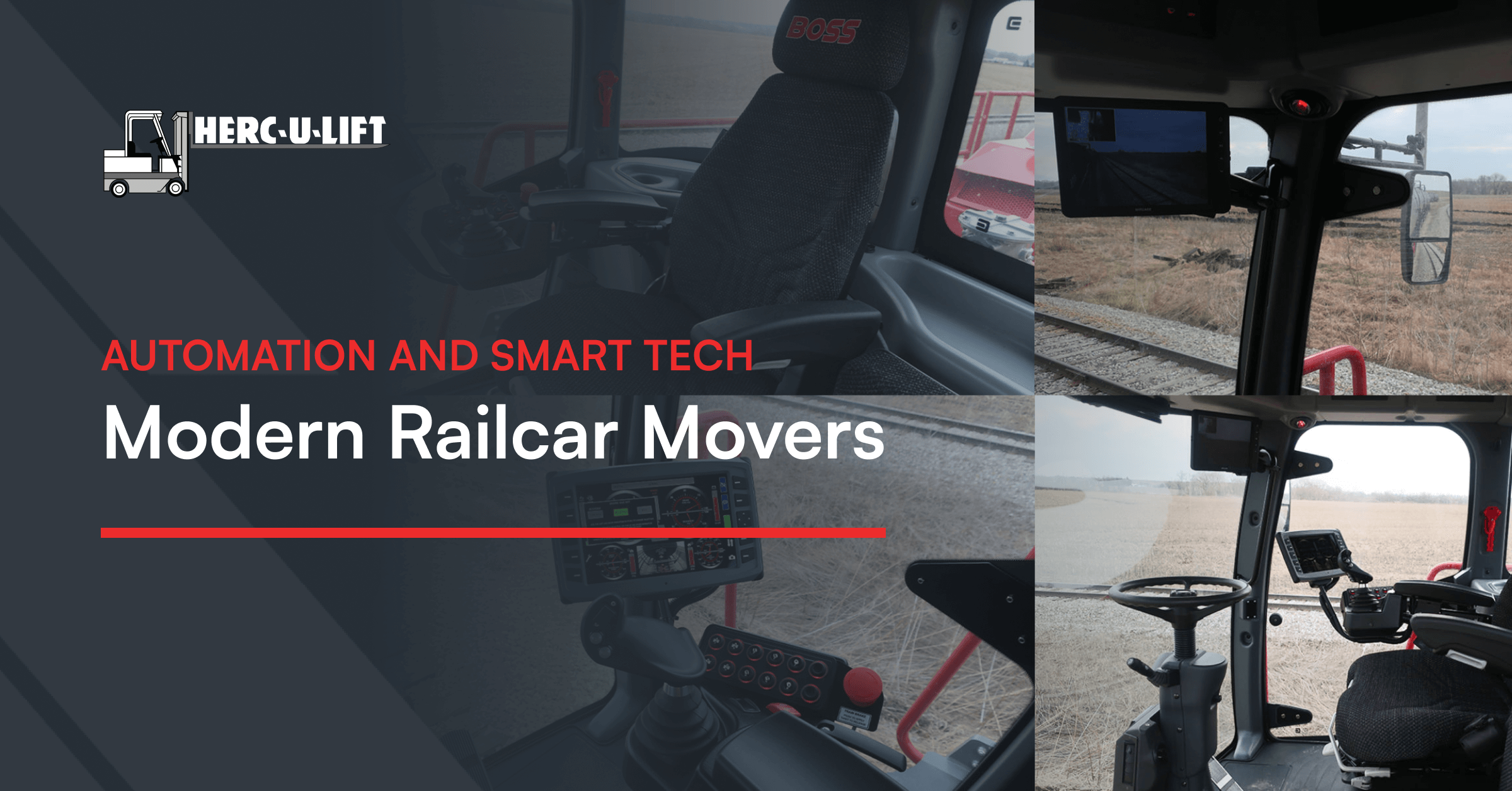
For decades, rail yards have been loud places where diesel smoke hung in the air. Radios crackled nonstop. A lot depended on human judgment at odd hours of the day (and night). If something went wrong, it usually went really wrong. It often meant bent steel, delayed shipments, injured workers, or all three.
Fortunately, old-school industrial sites are quietly evolving into tech-enabled environments. Many heavy equipment vehicles now come equipped with intelligent systems. And it’s changing how everything moves and how safely tasks are performed.
At the center of this digital shift is a workhorse many people outside the industry barely know: the railcar mover.
In simple terms, a railcar mover is a dual-mode vehicle that is part road vehicle and part rail machine. This hybrid workhorse is used heavily in industrial plants, ports, and terminals where flexibility matters more than brute locomotive power.
So, the big question now is: how is technology reshaping the way these movers operate?
BOSS, Trackmobile, Rail King, Zephir, and other manufacturers have been steadily integrating automation, smart sensors, and digital control systems into their units. Moreover, there is growing interest in hybrid and fully electric railcar movers. Some operators today want energy-conscious alternatives that still deliver reliable performance.
In this article, we explore the innovations behind this modern shift. We discuss the technologies inside modern movers, plus how they improve safety and efficiency. Of course, we also tackle where the limits are and what the near-future of semi- and fully autonomous yard movement realistically looks like.
The Evolution from Manual to Smart-Enabled Movers
Railcar movers started life as straightforward, diesel-powered mechanical machines. The early models were robust and did one job: push and pull cars. Operators mostly relied on manual controls and analog gauges.
The heavy equipment worked, but demanded constant attention. Plus, mistakes were unforgiving.
Over time, several technological milestones transformed these machines from purely mechanical to digitally enhanced:
• Electronic control units (ECUs) were introduced to better manage engines, transmissions, and braking.
• GPS tracking became available to help yards know where equipment was, instead of guessing or phoning around.
• Digital displays and basic diagnostics began to help operators and technicians troubleshoot issues faster.
In North America and Europe, modernization initiatives in rail and intermodal logistics have pushed this trend forward. Large industrial sites such as chemical plants, steel mills, and grain terminals started demanding more uptime. They also wanted tighter safety margins and better reporting to meet regulatory and customer requirements. That pressure filtered directly into mover design.
Automation in this space didn’t start with robots taking over the cab. It started small:
• Automated braking functions to stabilize heavy cuts of cars.
• Load-sensing systems that adjust traction and braking forces.
• Integrated traction control to reduce wheel slip and rail damage.
Eventually, those “small” optimizations opened the door to connected and semi-autonomous functions. Once you have ECUs, sensors, and some level of connectivity, you can start layering on things like telematics, remote control, and AI-assisted features. Today’s top-tier railcar movers communicate, self-monitor, and assist operators in real time.
Core Smart Technologies in Modern Railcar Movers
Now let’s break down the main smart technologies you’ll see in modern railcar movers and what they actually do for a yard.
1. Telematics and Real-Time Data Monitoring
Telematics is essentially the connected fleet’s nervous system. It combines onboard sensors, ECUs, communication modules, and cloud or on-premise software to send real-time data. In a railcar mover, telematics typically tracks:
• Engine hours, fuel consumption, and idle time.
• Location and movement history.
• Fault codes, alarms, and key operating parameters.
• Load profiles and usage patterns.
Why it matters:
Predictive maintenance
Instead of waiting for something to fail on a busy shift, maintenance teams can see early warning signs (such as overheating or repeated error codes) and fix issues before they become breakdowns.
Downtime reduction
Data allows you to plan service around actual use, not just calendar time, which keeps movers available when operations need them most.
Operator accountability
If you have multiple operators, you can track who was on the machine and how it was driven. That removes a lot of guesswork when incidents or unusual wear pop up.
Modern telematics in industrial fleets often aligns with ISO standards around fleet management data (such as ISO-based formats for data sharing and interoperability). That makes it easier to integrate railcar mover data into broader fleet or yard management platforms without custom one-off setups.
2. Remote Operation and Wireless Control
Remote operation once felt far-fetched in rail yards. Now it’s a practical, everyday tool. Wireless remote controls let operators run a railcar mover from outside the cab using a handheld unit. The real advantage shows up during coupling, where standing closer gives a clear view of the track, the joint, and nearby workers.
Working outside the cab improves safety in tight or hazardous areas. It also speeds up the job. Operators can move with the railcars and make fine adjustments in real time. They avoid constantly climbing in and out of the cab. Visibility improves, communication gets simpler, and mistakes are easier to avoid.
To make this work safely, modern systems are built with multiple safeguards. If the signal drops or the remote is released, the machine stops automatically. Remote modes also limit speed and restrict certain functions. The operator stays fully in control, just with better awareness and fewer blind spots.
3. Advanced Safety Sensors and AI Integration
Many current and next-generation units are now using a combination of:
• Ultrasonic or radar sensors for proximity detection.
• LIDAR or camera-based systems for obstacle recognition.
• AI algorithms that classify what those sensors see (person, vehicle, equipment, object).
The benefits are straightforward but powerful:
Collision prevention
During coupling or movement through complex yard layouts, sensors can detect obstacles. It can either warn the operator or automatically slow/stop the mover.
Low-visibility safety
Fog, night operations, blind curves, and cluttered industrial environments are all areas where human eyes alone can miss things. Sensors help fill the gaps.
While we’re still not fully at the point of “press a button and walk away,” we are moving steadily toward higher levels of automated assistance.
For example, some manufacturers are already testing semi-autonomous path guidance. These are systems where the mover can follow a predefined route, maintain safe speeds, and enforce stopping rules with an operator’s supervision.
4. GPS and Geofencing for Yard Management
Geofencing takes this a step further by adding digital boundaries inside the yard. Virtual zones can be set around restricted tracks, loading areas, maintenance spaces, or public crossings. When a mover enters or leaves one of these areas, the system flags it automatically.
In addition, geofencing can monitor how the machine behaves within those zones. Alerts are triggered if a mover exceeds speed limits or operates outside its assigned territory.
The result is better compliance and operational oversight.
5. Intelligent Braking and Stability Control Systems
Modern railcar movers use electronic braking systems that constantly adjust to real working conditions. Braking force changes based on load weight, track slope, surface conditions, and real-time traction feedback. The system responds faster than a human can, especially when handling heavy cuts.
Instead of applying one fixed braking input, pressure is adjusted on the fly to prevent wheel slide and skidding. Braking is spread more evenly through the system, which reduces stress on couplers, wheels, and rail infrastructure.
The result is smoother, more controlled moves with less wear on equipment and track. Just as important, it lowers the risk of derailments caused by over-braking, under-braking, or simple operator misjudgment.
How Automation Enhances Operational Efficiency
In real-world operations, automated systems reduce variability. They also offer the following benefits:
Faster switching
Remote operation and better visibility shorten the time per coupling and cut movement. Instead of repeated “in-and-out-of-the-cab” cycles, the operator stays engaged on the ground and closer to the action.
Reduced labor dependency
One skilled operator can often handle tasks that usually require multiple people. The same person can also manage more complex movements with fewer delays and fewer communication errors.
Consistent performance
Automation doesn’t get tired at the end of a 12-hour workday. Intelligent systems help maintain operational consistency across shifts and operators.
Manufacturers have reported performance improvements, such as double-digit reductions in dwell time per car or significant drops in incident-related stoppages after deploying telematics and advanced safety packages. Large industrial shippers that upgraded from purely manual movers to modern models often see:
• Shorter average move times per cut.
• Fewer “near miss” reports related to poor visibility or miscommunication.
• More precise utilization metrics to justify fleet size and upgrades.
Every yard’s numbers differ, but the pattern is consistent: the more data and automation you add (within reason), the smoother and more predictable yard operations become.
Case in point, Rod Cochran, Logistics Operator of Abengoa Bioenergy, reports experiencing only 5 hours of downtime over 6 years of using a Trackmobile Titan. This demonstrates how smart diagnostics and modern design translate directly into uptime.
The Safety Impact of Smart Railcar Movers
Most yard accidents share the same root problems:
• Human error (misjudged distance, miscommunication).
• Poor visibility (blind spots, night, fog, obstructions).
• Fatigue and complacency (repetitive tasks, long shifts).
Automation addresses all three. Here are some practical examples:
Auto-braking on human detection
If sensors or cameras identify a person in a defined danger zone (between cars, on the rail in front of the mover), the system can trigger warnings and, if needed, automatic braking.
Integrated cameras and 360° views
Operators can see what’s happening around the machine on displays, reducing the reliance on mirrors, spotters, and guesswork.
Remote diagnostics
Telematics can flag unsafe conditions, such as repeated overheats, brake system faults, or critical alarms. Equipment can be pulled from service before a failure causes an incident.
From a standards perspective, these features help operators align more easily with FRA and OSHA requirements in North America and EN railway safety standards in Europe. Automated logging and event records also make incident investigations faster and more fact-based.
In practice, certified yard operators who’ve moved from older movers to sensor-enabled units often report 30 to 40% fewer recordable safety incidents tied directly to railcar movement.
Data-Driven Maintenance and Predictive Analytics
Every hour a railcar mover operates, it generates data.
Data analytics detect wear patterns, overheating, hydraulic problems, and vibration anomalies. Predictive algorithms flag components likely to fail weeks or months before they do.
Maintenance moves from reactive fixes to planned service.
This approach fits squarely within Industry 4.0 principles. Some advanced fleets are experimenting with digital twins, virtual models of physical machines that simulate wear and performance over time.
The payoff is straightforward: fewer breakdowns, better parts planning, and longer equipment life.
Challenges and Limitations of Automation in Railcar Movers
Smart tech definitely has its limitations, such as:
High upfront cost
Smart packages (telematics, sensors, remote control, AI features) add to the purchase price. The huge initial investment can be a hurdle for smaller operators.
Legacy infrastructure compatibility
Many yards still run on older track layouts, analog processes, and paper-based systems. Plugging a modern digital mover into a non-digital environment can be limiting. Unless, of course, the yard also upgrades its systems and workflows.
Operator retraining
You can’t just drop a telematics- and sensor-loaded mover into a yard and hand over the keys. Operators and maintenance staff need new training. That takes time and money.
Software updates and support
Smart systems need firmware updates and occasional troubleshooting. If you ignore that, your “smart” mover slowly becomes outdated.
Cybersecurity is another serious concern. Remote operation and connectivity create potential attack surfaces. Without proper encryption, authentication, and network segmentation, it’s theoretically possible for someone to interfere with control or data.
The expert consensus is straightforward: automation should complement skilled human oversight, not replace it. The safest and most efficient yards are still those where experienced people work with smart tools. Not those that try to run on autopilot with humans as an afterthought.
The Human Role in an Automated Environment
Far from making operators obsolete, smart railcar movers are actually changing what it means to be a good operator. Instead of being purely a “driver,” the operator becomes more of a system supervisor and coordinator.
Today’s operators do more than just run the machine. They manage remote controls, monitor screens, and interpret sensor feedback in real time. They also coordinate with ground crews and yard management systems. When automated systems reach their limits, operators step in to make the call.
Of course, fulfilling these roles requires hybrid skills. While mechanical understanding is still important, digital literacy now matters just as much. Continuous training is a must. Even the best automation can be misused or misunderstood if operators don’t fully grasp what it can and cannot do.
The goal is to create teams that:
• Trust the technology but verify and supervise it.
• Know when to let automation assist and when to take manual control.
• Use data to improve habits rather than feeling policed by it.
Ultimately, the safest yards are the ones where humans and machines work together effectively.
Future Outlook: Toward Fully Autonomous Yard Movement
So where is all this heading?
We’re already seeing early versions of movers with self-docking capabilities, which help them line up precisely with railcars using sensors and control logic. AI-based pathfinding is also emerging, allowing movers to select efficient routes while accounting for track availability and obstacles. At the same time, tighter connections to yard management software (YMS) feed movers real-time instructions instead of static work orders.
In the short term, over the next three to five years, change will be steady but practical. Semi-autonomous features like guided movements and automatic speed control will become more common. Remote operation will feel less experimental as yards grow comfortable with the safety case and the return on investment. Telematics data will play a bigger role in shaping staffing levels, shift planning, and long-term equipment decisions.
Looking further ahead, over five to ten years and beyond, more advanced automation becomes realistic in tightly controlled environments. Driver-optional operations will allow movers to follow pre-planned routes while operators supervise from a central control room. These systems will tie more closely into autonomous or semi-autonomous rail shunting programs already being tested. At the same time, regulations will continue to evolve, creating clearer rules for automated yard operations similar to those emerging in other industrial sectors.
As these technologies become proven and standardized, they will likely define which rail yards are competitive and which get left behind.
Conclusion
Railcar movers are no longer just mechanical tools. They’re intelligent logistics assets.
Automation isn’t about replacing people or chasing buzzwords. It’s about promoting safer yards, smarter decisions, and more sustainable operations.
For yard managers and logistics planners, the real question isn’t whether to adopt smart technology but whether your operation is ready to use it well.
Before jumping in, it’s wise to consult certified automation suppliers. Think carefully about both software and hardware procurement. Make sure systems are compatible and compliant with current safety standards. Plan for operator training, too.
When handled well, automation and smart technology can transform a rail yard from a cost center full of surprises into a strategic asset built on safety, data, and long-term reliability.




 →
→