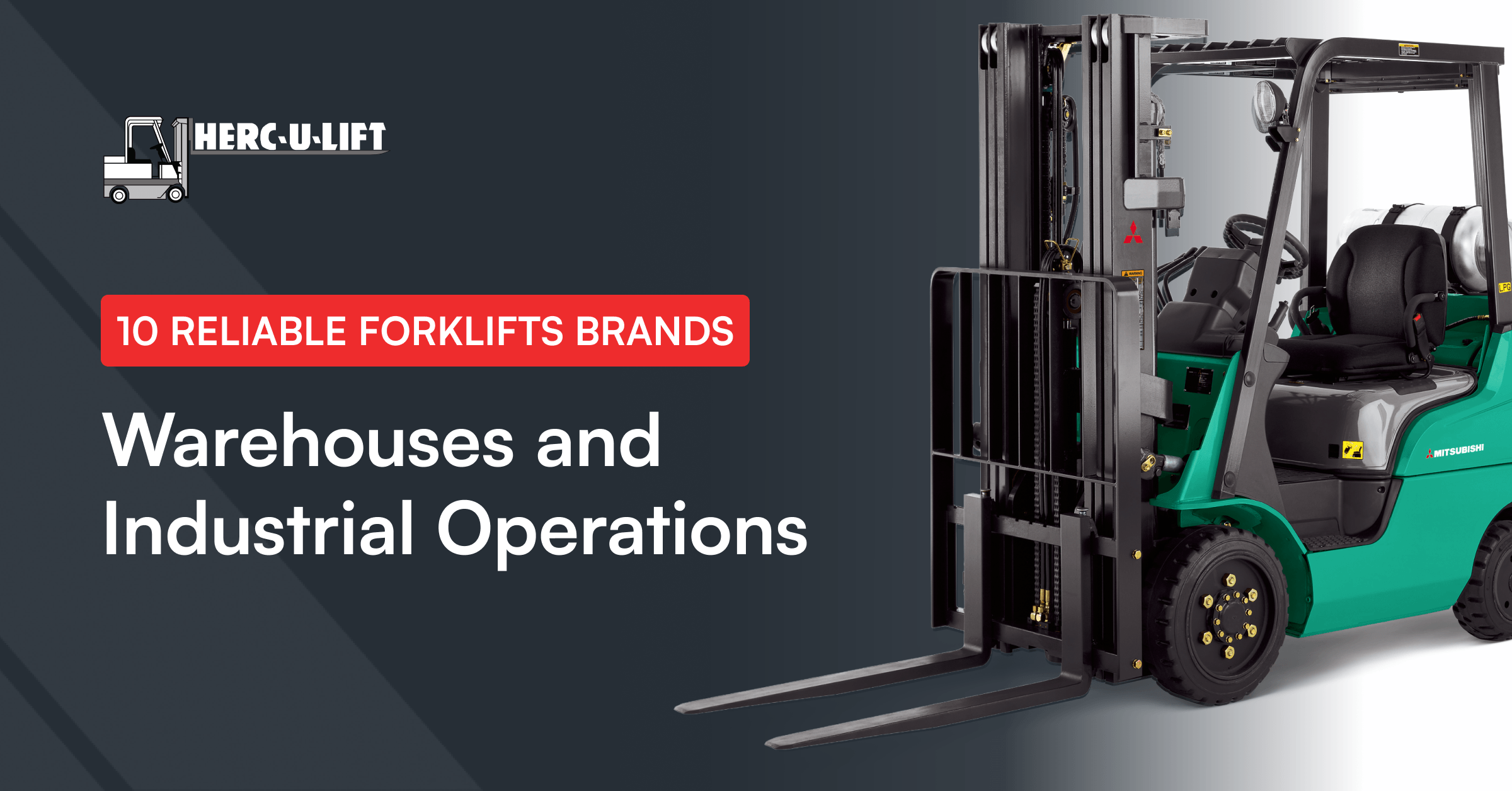
10 Reliable Forklift Brands for Warehouses and Industrial Operations
When it comes to forklifts, reliability is non-negotiable. It can be the difference between a smooth-running operation and a job site full of frustrated workers staring at a blinking “engine fault” light.
Every minute a forklift sits idle costs money. Downtime often causes safety risks and pricey repairs. Missed shipments pile up. Workers stand idle. Inventory also stalls.
That said, smart warehouse managers know one thing. Dependability always outweighs fancy features.
The best forklifts don’t need to dazzle. They just need to perform, day in and day out. And when a machine performs without trouble, the whole business runs smoother.
This article helps business owners and decision-makers choose the right forklift. We compiled this list based on performance, reputation, and service support. It also reflects user feedback and expert insights.
In this guide, we review the best forklift brands. We give you a brief background for each one. We highlight both their pros and cons. In addition, we tell you about their ideal applications and feature some recommended models.
Factors That Make a Forklift Brand Reliable
Before we jump into the brands, let’s quickly go over what’s behind forklift reliability.
Build Quality and Durability
A forklift’s dependability starts with its build. Besides, these machines thrive in harsh settings. They’re usually spotted on rough terrain sites or tight warehouse aisles.
To illustrate, several important elements determine how well a machine can withstand years of wear and tear. Brands known for forklift durability use heavy-duty frames and robust masts for strength. Precision hydraulics and powerful engines add reliability. Also, forklifts with high-quality steel and rust-resistant finishes generally outlast cheaper competitors.
Safety Standards and Compliance
A reliable forklift not only avoids breakdowns. It also keeps the operator safe every hour it’s in use. Go with brands that comply with OSHA, ISO, and regional safety standards.
Look for operator safety features, such things as anti-tip systems, automatic braking, and ergonomic controls. These forklifts consistently perform better than those that cut corners.
Ease of Maintenance and Parts Availability
When replacement parts take weeks to arrive, “reliability” quickly becomes just a marketing word. Top forklift brands maintain strong parts availability. Of course, they also provide comprehensive user manuals.
After-Sales Service & Warranty Support
Dependable after-sales support proves a brand’s commitment to their buyers. Accessible service centers and transparent warranty policies give clients peace of mind. After all, even the best-built machines eventually need maintenance.
Total Cost of Ownership (TCO)
Sometimes, an affordable forklift may end up costing more than you initially paid for. How so, you ask? Well, some cheap lifts burn through fuel, eat tires, or constantly need repairs.
The most reliable forklift brands balance purchase cost and maintenance with fuel or energy efficiency. Ultimately, they also have better overall resale value.
10 Reliable Forklift Brands for Different Applications
Forklift reliability can vary depending on maintenance practices, operating environment, dealer support, and fleet application. These brands consistently deliver reliability, safety, and strong after-sales support.
1. Mitsubishi
Mitsubishi blends Japanese precision with impressive global support. Their lineup covers everything from compact electrics to large diesel models. Moreover, the brand’s claim to fame is its low maintenance yet stable forklifts.
Strengths:
• Excellent ergonomic design.
• Advanced safety features, like curve control and automatic braking.
• Competitive pricing compared to Toyota.
• Energy-saving technology.
• Improved uptime and reduced cost.
• Strong customer support.
Limitations:
• Less extensive dealer coverage in smaller markets.
• Fewer rough terrain forklift options.
Best for: Medium to large warehouses, distribution centers looking for energy-efficient electric models.
Hyundai has quickly become a strong contender in the market since launching its forklift line in 2000. The brand perfectly balances price and dependable performance. Their forklifts combine smart design and operator comfort, often at an affordable price point.
Strengths:
• Good blend of power and efficiency.
• Fleet reliability.
• Modern operator cabins.
• Competitive pricing.
• Strong warranty coverage.
• Accessible service support.
• Great ROI/value.
Limitations:
• Not as rugged as Komatsu or Hyster-Yale for extreme environments
• Fewer specialty attachments
• Limited high-tech features (compared to premium brands).
Best for:Cost-conscious buyers requiring dependable forklifts for light- to medium-duty projects.
Big Joe is known for its user-friendly forklifts. The brand focuses heavily on warehouse solutions that are durable and easy to maintain.
Strengths:
• Strong focus on electric and lithium-ion technology.
• Simple controls and operator-friendly features.
• Lower maintenance requirements.
• Competitive pricing for small- to medium-sized operations.
• Reliable customer support and growing dealer network.
Limitations:
• Limited heavy-duty outdoor forklift options.
• Smaller product lineup.
• Less suited for extreme industrial environments.
Best for: Warehouses and retail distribution center seeking efficient electric forklifts for indoor material handling.
Notable models: Big Joe LPE100S, Big Joe LVE35, Big Joe LCE50
4. Cat
Caterpillar’s forklifts are built on a legacy of rugged industrial machines. They carry the same rugged DNA as their construction equipment. Known for durability, high torque, and minimal downtime, Cat forklifts machines perform well in tough outdoor settings.
Strengths:
• Powerful engines and strong lifting capacities.
• Exceptional after-sales support via global dealer network.
• Built-in diagnostics for maintenance efficiency, easier serviceability
• Good parts availability.
Limitations:
• Slightly higher fuel consumption.
• Typically priced at a premium for durability.
Best for: Construction yards, manufacturing plants, and rough outdoor operations with heavy loads.
Notable models: Cat GP25N, Cat DP40N, Cat NR10N2.
5. Kalmar
Kalmar is a Finnish brand with deep roots in heavy material handling. The company is best known for building serious machines for ports, terminals, and industrial yards. Their forklifts are engineered to lift massive loads. They often outperform standard warehouse units.
Strengths:
• Exceptional durability and lifting power.
• Advanced safety and stability systems.
• Strong reputation in port, steel, and heavy logistics sectors.
• Excellent parts and service support through global dealer networks.
Limitations:
• High initial investment compared to standard industrial forklifts.
• Bigger models require specialized operators and maintenance.
Best for: Ports, shipping yards, steel plants, and other heavy industrial applications.
Notable models:
Kalmar DCG180-12, Kalmar ECG90–180 Series, Kalmar DCF Series
6. Hyster-Yale
Hyster and Yale have decades of experience building heavy-duty lift trucks. Both brands are now under Hyster-Yale Materials Handling since 2012. Their forklifts are built to handle demanding jobs with ease. They perform well in rugged settings like ports and lumberyards. These machines are also trusted in busy logistics and industrial centers. Reliability and strength are at the core of every model.
Strengths:
• Built for rugged industrial use.
• Strong presence in North America and Europe.
• Advanced telematics and operator-assist systems.
• Great service network and parts accessibility.
Limitations:
• Some models have higher fuel consumption.
• Limited electric options than Mitsubishi or Toyota.
• Bulky designs may not fit well in narrow aisles.
Best for: Construction sites and manufacturing plants requiring versatile forklifts.
Toyota has a solid reputation for precision engineering and outstanding reliability. Furthermore, every unit is built under the Toyota Production System (TPS). This strict quality process ensures consistency and performance. No wonder, businesses of different sizes trust Toyota forklifts.
Strengths:
• Superior build quality.
• Ergonomic designs.
• Advanced safety features, such as System of Active Stability.
• Wide range of electric, LPG, diesel, and hybrid forklifts.
• Extensive service network.
Limitations:
• Slightly higher upfront cost than competitors.
• Wait times for parts in certain regions.
Best for: Diverse warehouse settings that prioritize long-term reliability and ROI.
Notable models: Toyota 8FGCU25, Toyota 3-Wheel Electric 8FBE15U, Toyota Core IC Cushion series
8. Crown Equipment
Crown is an American brand that mainly focuses on electric forklifts and warehouse solutions. Their operator-friendly machines feature ergonomic controls and easy maintenance. Also, Crown places emphasis on the importance of safety compliance.
Strengths:
• Top-tier electric forklift engineering.
• Accessible parts and maintenance support.
• Compact, efficient designs for warehouse use.
• Award-winning safety features.
• Extensive dealer network.
Limitations:
• Limited diesel/LPG options.
• Slightly higher initial price for electric models.
Best for: High-volume warehouses, distribution centers, and e-commerce facilities.
Komatsu brings its heavy equipment expertise to its forklift line. Their machines are tough, reliable, and built for demanding work. In fact, they handle harsh conditions with minimal downtime. Today, Komatsu forklifts are often seen in construction, manufacturing, and outdoor operations.
Strengths:
• Rugged construction and long engine life.
• Easy serviceability.
• Availability of electric and hybrid models.
• Advanced safety and comfort features.
Limitations:
• Fewer electric models than newer competitors.
• Slightly dated cabin ergonomics in some models.
• Service network is growing but less dense in some regions.
Best for: Outdoor or mixed-use operations that require heavy lifting and advanced tech forklifts.
Notable models: Komatsu FG25T-16, Komatsu FB20EX, Komatsu AX50 Series
10. Clark
Clark is a true pioneer in forklift history. With roots dating back to 1917, the manufacturer continues to create affordable, reliable lifts that emphasize simplicity and ease of maintenance.
Strengths:
• Offers 300+ forklift models.
• Good balance of cost and durability.
• Easy servicing and straightforward design.
Wide dealer network and strong global presence.
Weaknesses:
• Not as advanced technologically as top brands.
• Basic cabin design on older models.
Best for: Small- to mid-sized businesses looking for true reliability at a reasonable price.
Notable models: Clark C25C, Clark C40CL, Clark S30
Side-by-Side Forklift Brand Comparison
The table below shows a detailed forklift brand comparison to help you evaluate price, reliability, and service coverage.
Brand
Reliability Rating
Service Network
Price Range
Warranty
Best Use Case
Mitsubishi
★★★★★
Excellent
$25,000-$80,000
1-5 years
Warehouses, logistics centers
Hyundai
★★★★★
Excellent
$2,000-$80,000
3-8 years
Budget-friendly, general use
Big Joe
★★★★★
Excellent
$8,000-$45,000
1-5 years
Indoor warehouses, retail distribution, electric material handling
Cat
★★★★★
Excellent
$15,000-$100,000
1-5 years
Industrial, construction, rough terrain
Kalmar
★★★★★
Excellent
$15,000-$350,000
2-5 years
Ports, logistics, and heavy industry
Hyster-Yale
★★★★★
Excellent
$10,000-$80,000
3-5 years
Rugged heavy-duty use
Toyota
★★★★★
Excellent
$20,000-$100,000
1-5 years
Warehouses, general use
Crown
★★★★☆
Very Good
$15,000-$35,000
2-5 years
Indoor warehouses, energy-saving focus
Komatsu
★★★★☆
Very Good
$20,000-$72,000
2-5 years
Outdoor, industrial use
Clark
★★★★☆
Very Good
$20,000-$100,000
2-3 years
Small & medium business applications
Expert and Industry Insights
Mitsubishi forklifts are among the most widely recognized brands in the material handling industry. They’re known for their reliability and consistent performance.
Many businesses report improved operational efficiency after switching to Mitsubishi equipment. According to them, they experienced reduced maintenance requirements and less unplanned downtime. The forklifts’ smooth handling and strong maneuverability also make them well-suited for demanding environments.
Other leading brands in the market include Cat, Hyundai, Hyster-Yale, and Toyota.
Conclusion
Choosing the right forklift isn’t about picking the most expensive brand. It’s about finding the machine that fits your unique needs. The best choice depends on your workload, environment, and budget. Matching the machine to your operation ensures better performance and value.
Each forklift brand offers strengths depending on the application, environment, and operational priorities. Brands like Mitsubishi, Cat, Hyundai, Kalmar, and Hyster-Yale continue to be trusted choices across warehouses, logistics, and industrial environments. Toyota, Crown, and Linde also remain well-known names in the industry for specialized applications.
When comparing top forklift manufacturers, think long-term.
Reliability isn’t just about what happens in year one. You also need to know how you can maintain performance in year five.
Take note that electric forklifts shine in indoor warehouses with zero emissions and lower operating costs, while diesel models excel in outdoor or heavy-duty work. When comparing electric vs diesel forklifts, factor in fuel availability, maintenance frequency, and your workspace environment.
If you’re considering upgrading your fleet or adding new units, start by listing important factors based on your priorities. Think about fuel type, capacity, terrain, or service coverage. Next, match it with the brand that fits those priorities.
A reliable forklift is a productivity partner. So, treat the choice like you’re hiring a key employee. Because in a way, that’s exactly what you’re doing.
Need help choosing the right forklift for your operation?
Take time to do your research. Consult with forklift experts before deciding. This will help you find which specific models actually fit your budget and business needs. As a result, you can experience less downtime, fewer repairs, and safer operations.
At Herc-U-Lift, we offer flexible rentals and rent-to-own options. Clients who are still unsure about purchasing can avail of our services. They can explore different brands without the pressure of heavy upfront spending. Contact our team now and we’ll provide you with the support you need.
Share
ABOUT THE AUTHOR
The Herc-U-Lift Team
The Herc-U-Lift team is dedicated to helping businesses across the Midwest work safer, smarter, and more efficiently. With decades of experience in material handling and construction equipment, we share practical tips, insights, and advice to keep your operations running strong. We’re not just an equipment provider. we’re your partner in creating safer job sites and more productive workplaces.
What Are MEWPs? A Complete Guide to Mobile Elevating Work Platforms
Every elevated job presents a different challenge. Choosing the right equipment makes the difference between a safe, productive day and a costly mistake. Whether you’re replacing warehouse lighting or completing a commercial construction project, safely reaching an elevated work area usually requires more than just a ladder. Enter: Mobile Elevating Work Platforms (MEWPs). MEWPs provide […]
Building a Better Warehouse Starts with Better Material Handling
The Hidden Backbone of Every Efficient Warehouse Most warehouses look similar from the outside. They may stock comparable inventory and operate from buildings with nearly identical square footage. Yet one facility consistently may ship orders faster and maintain better inventory accuracy. More impressively, they may achieve this with significantly lower labor costs. The difference is […]
Choosing the Right Forklift for High-Density Warehousing
Many warehouse operators assume that adding more racking is the answer to storage space problems. While additional storage systems can help, the equipment moving through those aisles often has a much greater impact on warehouse efficiency. Case in point, the wrong forklift can limit storage capacity and create traffic congestion. It also leads to slower […]





 →
→