How to Operate a Telehandler Safely in Confined Spaces
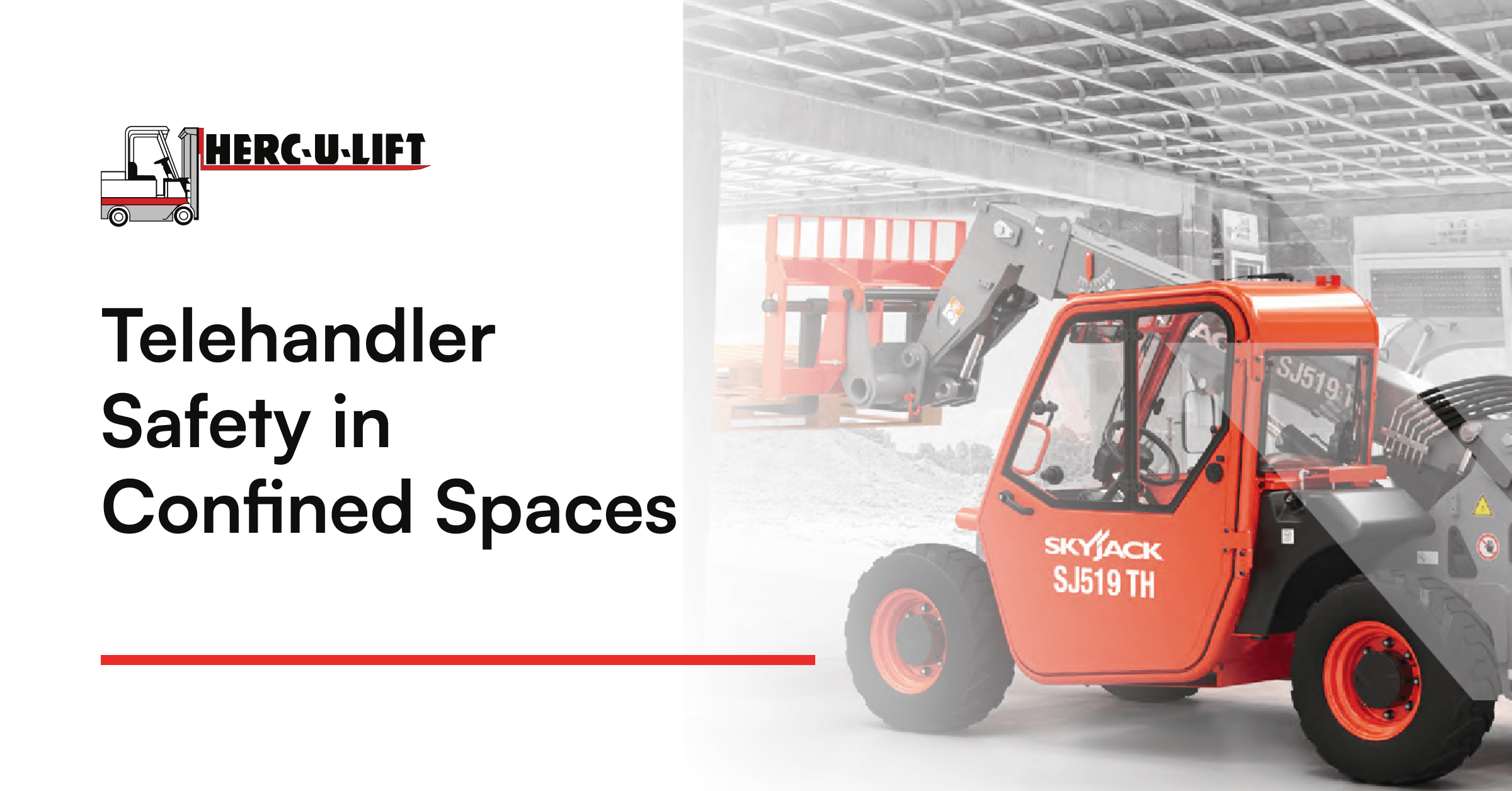
If you’ve worked on a construction site or warehouse, you’ve probably seen a telehandler in action. That versatile machine that looks like a forklift on steroids moonlighting as a crane. Officially called a telescopic handler, it’s one of the most capable lifting machines on any site.
A telehandler can lift pallets of bricks to a second floor and extend its boom to reach tight corners. It can even handle rough terrain that a standard forklift wouldn’t dare touch. This powerful equipment, however, has its own kryptonite: operating safely in confined or restricted spaces.
Tight environments introduce various risks. Low ceilings, tight turns, and limited clearance can make operation difficult. Many telehandler-related accidents also stem from simple issues like overloading or misjudging clearance. According to OSHA, a significant percentage of equipment incidents each year involve improper use or operator error. Many of these happen because someone underestimated just how tricky confined spaces can be.
This guide shows you how to operate a telehandler safely and efficiently in tight conditions. We pulled information from OSHA standards, manufacturer recommendations, and certified equipment operators who’ve spent years working in the field – not just behind a desk.
Understanding the Telehandler and Its Capabilities
A telehandler combines features of a forklift, a crane, and a loader. This makes it one of the most versatile heavy equipment. Key components include:
- The cab is the operator’s command center.
- Controls come with joysticks, pedals, and safety indicators.
- An extendable boom that gives the machine vertical and horizontal reach.
- Stabilizers and outriggers provide balance. They also prevent tipping when lifting heavy loads.
- Attachments like buckets, jibs, and pallet forks handle various load types.
The telehandler’s pivot steering allows it to make tight turns. However, that same steering can also make the machine unstable if handled carelessly. Keep in mind that the long boom changes the center of gravity as it extends. If you’re not watching the load chart, the telehandler may tip forward.
To stay on the safe side, refer to the manufacturer’s manual. The OSHA 29 CFR 1910.178 (Powered Industrial Trucks) or ANSI/ITSDF B56.6 standards also provide helpful info.
The Risks of Operating a Telehandler in Confined Spaces
Operating a telehandler is challenging enough on open ground. In a tight space, it’s a matter of precision. Whether it’s a low-ceiling warehouse or a crowded loading dock, the margin for error dramatically shrinks.
Here are some reasons why enclosed spaces are riskier:
- Limited Turning Radius
While pivot steering helps, the rear swing can catch walls or parked equipment. - Reduced Visibility
You’ve got blind spots all around, especially directly in front when the boom is raised or behind you when backing up. - Overhead Obstructions
Pipes, electrical conduits, sprinkler systems, steel beams, and low ceilings can interfere with boom movement. - Uneven or Sloped Flooring
Ground conditions affect stability, especially when you’re lifting near maximum load capacity. - Proximity Hazards
Workers, materials, or walls are often just inches away.
Telehandlers fall under the same category as forklifts and other powered industrial trucks. OSHA reports around 35,000 to 62,000 workers are injured in incidents involving these types of equipment. Some of these accidents happen in tight or partially enclosed areas, where limited space magnifies even the smallest operator mistake.
Bottom line:
Space limitations amplify every small mistake. Pre-operation checks and slow, deliberate movements are life-saving habits.5 Essential Pre-Operation Safety Checks
Before using a telehandler, it deserves a full walkaround. OSHA requires a pre-shift inspection to help catch problems and avoid any catastrophic failure mid-operation.
How to Operate a Telehandler Safely in Confined Spaces
Common Mistakes Operators Make in Confined Spaces
Even experienced operators can fall into bad habits. Here are the mistakes that lead to most accidents:
- • Operating with the boom raised while traveling.
This blocks visibility and destabilizes the machine. - • Overloading beyond rated capacity.
“Just this once” turns into a tip-over. - • Failing to use a spotter when visibility is limited.
Mirrors aren’t enough in tight spaces. - • Ignoring overhead clearance.
You’d be surprised how many operators clip pipes or beams they swore they had room to clear. - • Making sharp turns with an extended load.
The physics don’t work. You’ll tip. - • Using the telehandler to lift people.
Unless you have a properly rated and certified work platform attachment, this is illegal and extremely dangerous.
Real case example:
A few years back, a warehouse crew tried to place a pallet of HVAC units onto a mezzanine using a telehandler in a tight indoor space. Trying to save time, the operator raised the boom high before moving forward. Unfortunately, the ceiling clearance was lower than expected. The boom hit a crossbeam. This bent the attachment carriage, dropping part of the load. No one was hurt but the damage was costly. The incident report later pointed to poor planning and ignoring overhead hazards.Operator Training and Certification
OSHA doesn’t mess around when it comes to operator training. Under 29 CFR 1910.178, anyone operating a powered industrial truck (including telehandlers) must be trained, evaluated, and certified before they’re allowed to operate the equipment independently.
A complete telehandler training program should cover:
- • Reading, interpreting load charts and stability data.
- • Understanding machine controls and functions.
- • Safe maneuvering and emergency stop procedures.
- • Performing pre-operation inspections.
- • Hazard recognition in confined spaces.
- • Emergency response procedures.
- • Refresher training after accidents, near misses, or equipment changes.
Operators also need hands-on evaluation in the type of environment where they’ll be working. Case in point, a certification from an open yard doesn’t necessarily prepare someone for tight indoor spaces.
Employers must maintain documentation proving each operator’s competency. The ANSI/ITSDF B56.6 standard sets the industry benchmark for telehandler operator training. This is worth studying if you’re managing a team or designing a safety program.
Employer Responsibilities
Employers need to conduct regular safety audits, maintain equipment according to the manufacturer’s schedule, and provide adequate resources for safe operation. This includes providing spotters when needed, proper PPE, clear signage in work areas, and well-defined communication protocols.
When management takes safety seriously, it sets the tone for everyone else. If operators feel pressured to cut corners to meet deadlines, accidents will happen. Be clear that taking time to do things safely is not only acceptable. It’s expected.
PPE for Telehandler Operations
Personal protective equipment should never be optional. The following gear should always be worn:
- • Hard hats to protect against overhead hazards.
- • High-visibility vests so operators can easily spot workers in confined or congested areas.
- • Safety boots with slip-resistant soles and steel toes for stability and foot protection.
- • Gloves for better grip and hand protection when handling materials or performing inspections.
- • Hearing and eye protection depending on the environment and tasks being performed.
Conclusion
Safe telehandler operation in confined spaces is possible. It just requires more than knowing which lever to pull. It takes a mix of skill, planning, and discipline. As heavy equipment experts, we’ll say the best telehandler operators aren’t necessarily the fastest. They’re the ones who move the machine with great precision and care. They understand how to balance safety and efficiency. By doing so, they ensure that the job gets done right and everyone goes home safe.




 →
→