How to Safely Transport Heavy Equipment Between Job Sites
Transporting heavy equipment may seem like a routine task. In reality, every move introduces risk.
Poor transportation decisions can compromise worker safety. They can damage equipment and disrupt project schedules. As a result, operating costs eventually skyrocket.
Improper loading, unsuitable trailers, and inadequate route planning all lead to operational exposure. They can damage valuable machines before the next job site is reached. Even a minor mistake can lead to costly repairs, insurance claims, regulatory issues, and unexpected downtime.
Safe heavy equipment transport begins long before the machine is loaded onto a trailer. Careful planning protects expensive assets. Furthermore, it keeps projects moving without unnecessary delays.
Whether you’re relocating excavators, transporting forklifts, or moving aerial lifts, every move deserves the same level of preparation and attention.
This guide explains how to transport heavy equipment between job sites safely. You’ll learn how to prepare machinery and select the right trailer. We also share about securing equipment properly, planning safer routes, and completing inspections. Finally, you’ll learn how to determine whether professional hauling services is the better option.
Why Safe Equipment Transportation Matters
A damaged machine may arrive late. Eventually, projects get delayed. Crews may sit idle while waiting for replacement.
Safe equipment transportation protects:
• Employees loading and unloading equipment
• Motorists sharing the road
• Equipment operators
• Company assets
• Project schedules
• Customer commitments
Transportation planning also reduces several indirect business expenses, including:
• Equipment damage
• Unexpected repairs
• Insurance claims
• Equipment downtime
• Rental replacement costs
• Delayed project completion
• Lost productivity
• Regulatory compliance issues
• Reputation damage
Equipment logistics keeps machines productive and projects moving. Whether supporting construction equipment transport, warehouse fleet relocation, or municipal equipment delivery, safe transportation protects investments and reduces operational risk.
Planning Before Equipment Moves
Heavy equipment transport without considering weight, dimensions, site conditions, or route restrictions increases the likelihood of delays, equipment damage, and safety incidents. Spending extra time planning the move often saves far more time once transportation begins.
Know Your Equipment
Every machine has different transportation requirements. Before arranging equipment hauling, verify:
• Operating weight
• Overall width
• Transport height
• Overall length
• Ground clearance
• Center of gravity
• Attachment configuration
• Manufacturer transport recommendations
Attachments deserve special attention. Buckets, forks, blades, and other accessories may need to be removed or transported separately to reduce overall transport height.
Match Equipment to the Right Trailer
Transportation planning also includes confirming trailer compatibility before loading begins.
Selecting the proper equipment trailer reduces loading challenges. It also supports safer heavy equipment moving throughout the trip.
Evaluate Both Job Sites
A trailer may safely transport equipment across hundreds of miles but still encounter difficulties entering a confined job site or unloading on unstable ground. The loading and unloading locations should also be evaluated before scheduling the move.
Review both sites for:
• Ground stability
• Available loading space
• Surface conditions
• Access roads
• Overhead obstructions
• Grade changes
• Turning space for trucks and trailers
Plan the Route
Organizations that regularly manage construction logistics often review routes well before the scheduled move to prevent unexpected delays.
For larger machines, oversize load transport may require permits, approved travel routes, or escort vehicles. Requirements vary by jurisdiction. So transportation plans should always reflect applicable state and local regulations.
Coordinate Everyone Involved
Successful equipment delivery requires communication between everyone participating in the move.
Confirm responsibilities before departure to minimize confusion during loading and unloading.
Choosing the Right Trailer
Selecting the wrong trailer can create loading difficulties, increase transportation risk, or require unnecessary permits. Choosing the right one improves safety.
Lowboy Trailers
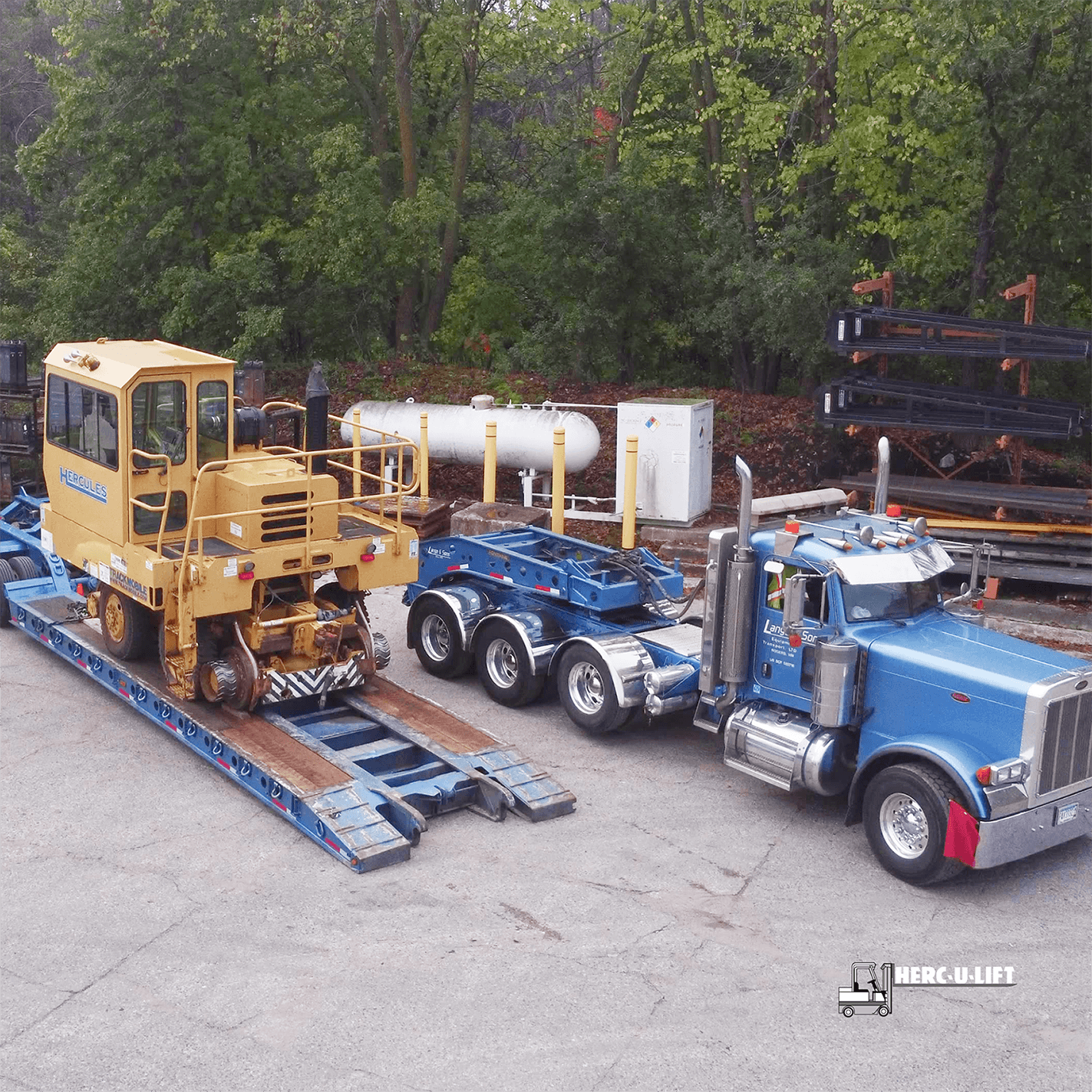
Lowboy trailers are commonly used for transporting larger machines that exceed the height limits of conventional trailers. Their lower deck keeps taller equipment within legal transport heights while providing excellent stability.
Best Applications
• Excavators
• Bulldozers
• Large wheel loaders
• Motor graders
• Heavy construction equipment
Advantages
• Accommodates taller machines without exceeding height restrictions
• Handles heavier loads than many standard trailers
• Provides a lower center of gravity during transport
• Widely used for construction equipment transport
Limitations
• Heavier than many other trailer types
• More expensive to operate
• May require specialized tractors or permits for oversized loads
Flatbed Trailers
Flatbed trailers are one of the most versatile options for equipment transportation. They work well for smaller machines that remain within legal height and weight limits.
Best Applications
• Compact equipment
• Small skid steers
• Utility tractors
• Light construction equipment
• Attachments and support equipment
Advantages
• Simple loading and unloading
• Readily available
• Flexible for a variety of cargo
• Lower transportation costs for smaller equipment
Limitations
• Limited deck height clearance
• Not suitable for taller machines
• Lower weight capacity than many specialized trailers
Gooseneck Trailers
Gooseneck trailers are commonly used for transporting compact and medium-sized equipment over shorter distances. Their hitch design improves maneuverability compared to many bumper-pull trailers.
Best Applications
• Compact excavators
• Mini skid steers
• Small loaders
• Utility equipment
• Local equipment moves
Advantages
• Improved stability
• Better maneuverability
• Suitable for frequent local transportation
• Efficient for smaller hauling operations
Limitations
• Limited payload capacity
• Not appropriate for oversized equipment
• Tow vehicle compatibility must be considered
Specialized Heavy Haul Trailers
Some equipment exceeds the capabilities of conventional trailers due to its size, weight, or configuration. Specialized heavy haul trailers are designed for these more demanding transportation requirements.
Best Applications
• Mining equipment
• Very large excavators
• Cranes
• Oversized industrial machinery
• Extremely heavy construction equipment
Advantages
• Supports exceptionally heavy loads
• Configurable for unusual equipment dimensions
• Designed for complex oversize load transport
• Provides greater flexibility for specialized moves
Limitations
• Higher transportation costs
• Often requires permits and escort vehicles
• Specialized operators and equipment may be necessary
• Longer planning timelines
Preparing Equipment for Transport
Clean the Equipment
Cleaning the machine makes inspections more effective. Mud, dirt, and debris can hide leaks, loose hardware, or damaged components.
Before transport:
• Remove excessive dirt and mud
• Clean windows, mirrors, and lights
• Remove debris from tracks or tires
Remove or Secure Attachments
Loose attachments can shift during transport or increase the overall size of the load.
Depending on the machine, consider:
• Removing buckets or forks
• Lowering blades and implements
• Securing auxiliary attachments
• Transporting oversized attachments separately when appropriate
Always follow the manufacturer’s transport recommendations.
Retract and Lower Moving Components
Proper positioning lowers the machine’s center of gravity and improves transport stability.
Address significant problems before moving the equipment. Transporting damaged undercarriages can create additional problems during loading or unloading.
Spotters improve visibility during loading, particularly when equipment blocks the operator’s view. Only one person should direct the operator at a time to avoid conflicting instructions.
A designated spotter should:
• Remain visible to the operator
• Use clear hand signals or radio communication
• Monitor trailer alignment
• Watch for nearby personnel
• Stop the operation if unsafe conditions develop
Load Slowly and Deliberately
Rushing the loading process increases the likelihood of operator error.
Operators should:
• Maintain steady speed
• Keep attachments low
• Avoid sudden steering inputs
• Stop immediately if visibility is lost
• Reconfirm positioning before continuing
Monitor the Center of Gravity
Large machines often have a high or uneven center of gravity.
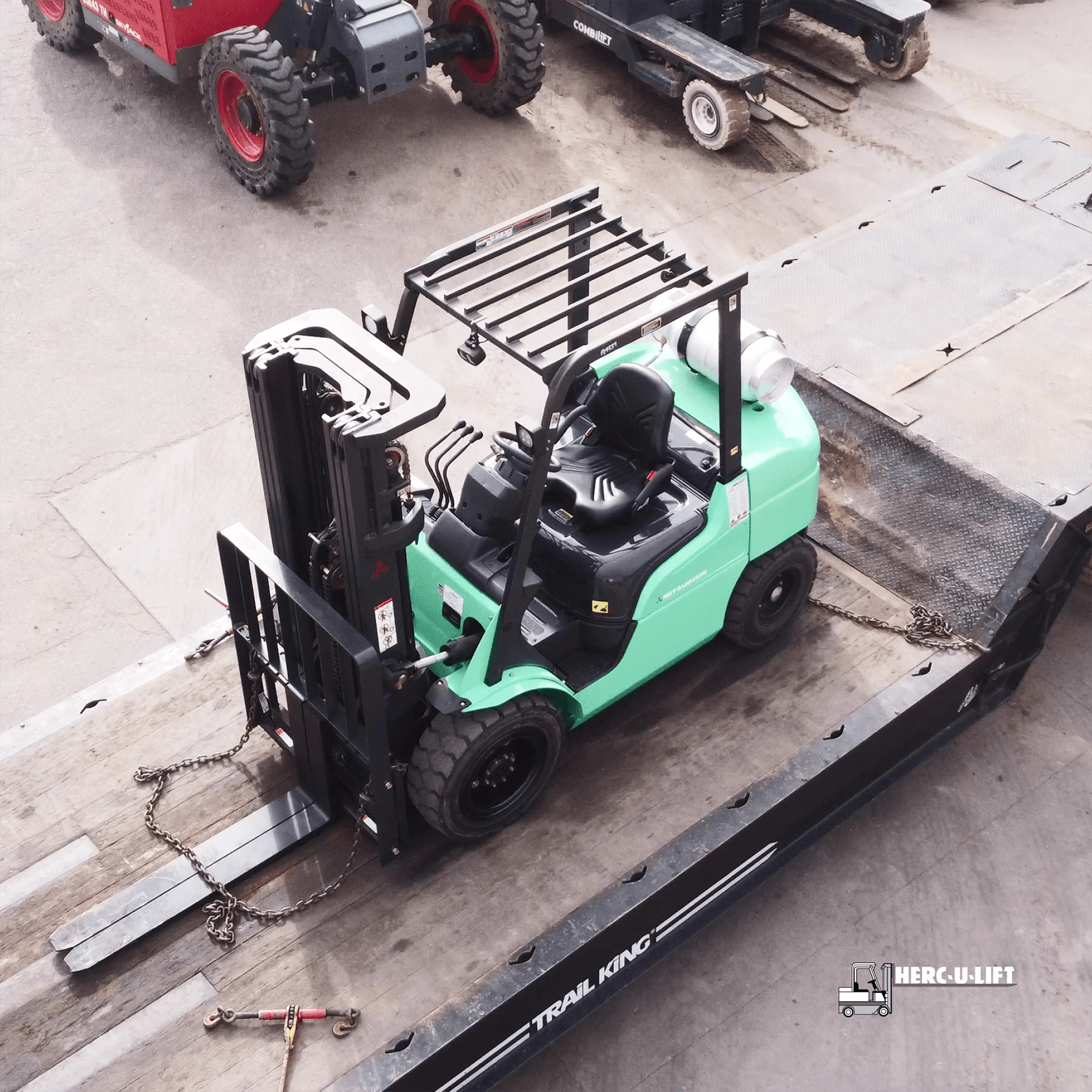
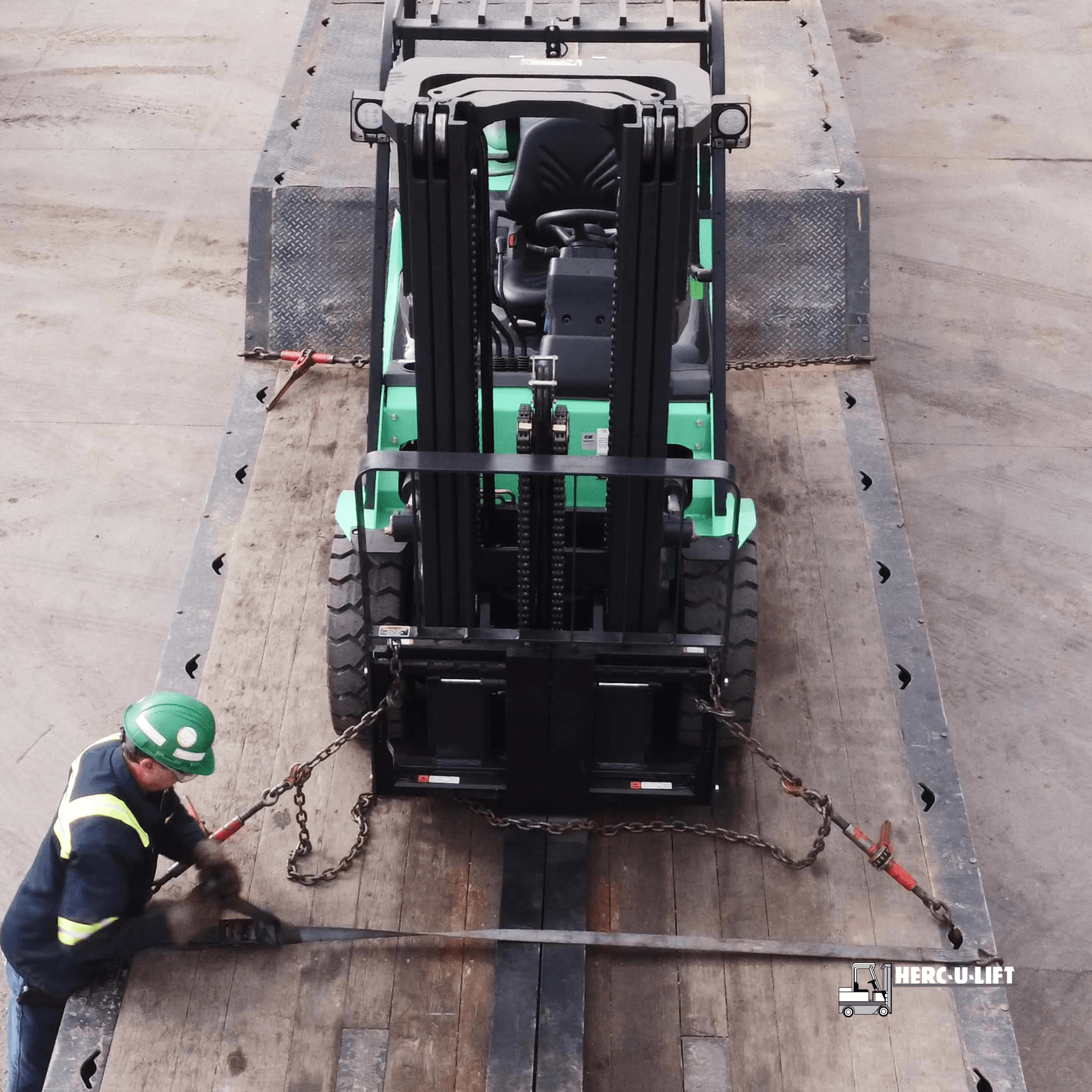
Loading the equipment is only half the job. Once the machine is positioned on the trailer, it must be secured to prevent movement throughout the trip. The size, weight, center of gravity, and attachment configuration all influence how equipment should be restrained.
Use the Right Securement Equipment
Different securement devices serve different purposes. Selecting the appropriate equipment is just as important as using it correctly.
Securement Device
Primary Purpose
Common Applications
Planning Consideration
Chains
Primary load restraint
Excavators, dozers, loaders
Match chain capacity to equipment weight
Load binders
Maintain chain tension
Heavy machinery
Inspect for wear before every trip
Wheel chocks
Prevent rolling
Wheeled equipment
Use as an additional safeguard, not a replacement for tie-downs
Secondary restraints
Secure attachments
Buckets, forks, blades
Prevent attachment movement during transport
Inspect all securement devices before use. Damaged chains, worn binders, or defective tie-down points should be replaced before transport begins.
Secure the Machine at Approved Tie-Down Points
Using improper attachment points may damage the equipment while reducing securement effectiveness.
Whenever possible:
• Use manufacturer-designated tie-down points
• Follow the manufacturer’s transport instructions
• Distribute restraint forces evenly
• Avoid placing excessive stress on vulnerable components
Secure Attachments Separately
Buckets, forks, blades, booms, and other attachments may require additional restraint during transport.
Depending on the equipment, attachments may need to:
• Be lowered completely
• Be mechanically locked
• Be chained independently
• Be removed and transported separately
Maintain Proper Load Balance
Securement cannot compensate for poor load placement.
Before tightening restraints, confirm that:
• Weight is evenly distributed
• The machine is centered on the trailer
• The center of gravity remains stable
• Axle loading remains appropriate
Inspect Securement Before Departure
Once securement is complete, perform one final inspection before leaving the job site.
Verify:
• Chains are properly tensioned
• Binders are fully secured
• Attachments cannot move
• Wheel chocks are properly positioned, when used
• No loose equipment remains on the trailer
Recheck Securement During Long Trips
Road vibration and changing conditions can gradually affect securement throughout the trip.
During longer moves, stop periodically. Be sure to inspect:
• Chain tension
• Binder security
• Attachment restraints
• Trailer condition
• Tire condition
• Overall load stability
Route Planning Considerations
The shortest route is not always the most practical. Careful planning reduces transportation delays. It also helps protect equipment, drivers, and the public.
Every equipment transport project should include a route review before departure. This becomes even more important when moving unusually heavy equipment.
Verify Bridge Clearances
Equipment height should always be confirmed before selecting a route.
Permit requirements vary by state and local jurisdiction. To be safe, verify current regulations before scheduling a transport.
Determine Whether Escort Vehicles Are Required
Some oversized loads require escort vehicles to assist with navigation. Confirm these requirements during the planning process rather than after loading has been completed.
Escort requirements often depend on:
• Equipment width
• Overall height and length
• Route characteristics
• State regulations
Pre-Departure Inspection Checklist
Complete one final inspection before the truck leaves the job site.
Trailer
✓ Tires are in good condition and properly inflated.
✓ Brakes are functioning correctly.
✓ Lights and reflectors are operational.
✓ Hitch, couplings, and safety chains are secure.
✓ Loading ramps are properly stowed.
Equipment
✓ No visible hydraulic leaks.
✓ Attachments are secured or removed.
✓ Moving components are locked in their transport position.
Load Securement
✓ Chains and binders are properly tensioned.
✓ Approved tie-down points are used.
✓ Attachments cannot shift during transport.
✓ Load balance has been verified.
Documentation
✓ Required permits are available, if applicable.
✓ Route information has been confirmed.
✓ Delivery instructions are complete.
✓ Emergency contact information is accessible.
Final Verification
✓ Driver and crew understand the transportation plan.
✓ Weather and road conditions have been reviewed.
✓ Nothing remains loose on the trailer or equipment.
Performing a pre-departure inspection takes only a few minutes. Those few minutes can prevent equipment damage, transportation delays, and unnecessary safety risks once the trip begins. So make sure to do these checks consistently.
Common Mistakes When Transporting Heavy Equipment
Transportation problems often begin with small oversights.
The following table outlines common mistakes, their consequences, and practical ways to prevent them.
Common Mistake
Potential Impact
How to Prevent It
Choosing the wrong trailer
Poor load stability, equipment damage, or permit issues
Match the trailer to the equipment’s size, weight, and transport requirements.
Improper weight distribution
Reduced vehicle stability, steering problems, and excessive axle loads
Position equipment according to trailer design and manufacturer recommendations.
Loose or unsecured attachments
Shifting loads or damaged equipment
Secure attachments separately. Remove them when appropriate.
Skipping equipment inspections
Mechanical failures or transportation delays
Complete pre-loading and pre-departure inspections every time.
Ignoring weather conditions
Reduced visibility and poor traction
Review weather forecasts. Adjust transportation schedules when necessary.
Poor communication during loading
Operator errors, equipment damage, or worker injuries
Assign a designated spotter. Establish clear communication before loading begins.
Failing to verify route restrictions
Unexpected detours, permit violations, or transportation delays
Review bridge clearances, road restrictions, and construction zones before departure.
Overlooking equipment height
Contact with bridges, utility lines, or overhead obstacles
Measure the complete transport height after the equipment has been loaded.
Improper equipment securement
Load shifting, damaged machinery, or regulatory violations
Follow manufacturer recommendations along with applicable DOT and local requirements.
Rushing the loading process
Loading incidents, unstable loads, and equipment damage
Allow adequate time for loading, inspections, and final securement checks.
Most Transportation Problems Are Preventable
Successful transportation relies on consistent planning rather than shortcuts. Standardized procedures, inspection checklists, and clear communication reduce mistakes. Together, they work to protect equipment, employees, and project schedules.
By learning from these common errors, organizations can strengthen their process and minimize costly disruptions between job sites.
Should You Transport Equipment Yourself or Hire a Heavy Haul Company?
Some organizations maintain their own trucks, trailers, and qualified operators. Others rely on professional equipment hauling companies.
Both approaches have advantages. The right choice depends on available equipment, internal expertise, transportation frequency, project requirements, and overall business priorities.
Consideration
Self-Transport
Professional Heavy Haul Company
Best for
Frequent, routine equipment moves
Occasional, oversized, or specialized moves
Equipment & trailers
Existing in-house fleet
Specialized transportation equipment
Permits & logistics
Managed internally
Often handled by the provider
Scheduling
Greater internal control
Coordinated with the transport company
Expertise required
Internal transportation knowledge
Specialized hauling experience
Overall investment
Higher equipment and labor costs
Lower upfront investment, service-based cost
When Self-Transport Makes Sense
Organizations with dedicated transportation resources often prefer to move equipment themselves.
Self-transport may be appropriate when:
• Equipment moves frequently between nearby job sites
• Suitable trucks and trailers are already available
• Qualified operators and drivers are on staff
• The equipment falls within standard transportation limits
• Schedules require maximum flexibility
Managing transportation internally can provide greater control over delivery timing while reducing dependence on outside providers. However, organizations should also account for the costs of maintaining transportation equipment, training personnel, insurance, inspections, and ongoing maintenance.
When a Heavy Haul Company May Be the Better Choice
Some moves involve requirements that exceed an organization’s in-house capabilities.
Professional transport providers may be appropriate when:
• Equipment exceeds standard size or weight limits
• Specialized trailers are required
• Oversize permits must be obtained
• Escort vehicles may be necessary
• Long-distance transportation is involved
• Internal transportation resources are unavailable.
For organizations that only move equipment occasionally, outsourcing may also eliminate the cost of owning specialized transportation equipment.
Consider the Total Cost
Transportation decisions should involve more than comparing hourly hauling rates.
Many contractors and fleet managers use a combination of internal transportation and professional hauling services. Routine local moves may be handled in-house. Meanwhile, oversized, specialized, or long-distance moves are outsourced to experienced transportation providers.
Building a Safe Equipment Transportation Program
A structured transportation program creates consistency across projects while reducing operational risk. It also supports better planning and fewer transportation incidents.
Reviewing these events allows organizations to improve procedures before more serious incidents occur.
Continuously Improve the Process
Transportation programs should evolve as equipment fleets, projects, and operating requirements change.
Regularly evaluate:
• Inspection procedures
• Transportation equipment
• Employee training
• Route planning practices
• Documentation systems
Lessons learned from previous moves
Small improvements made consistently can strengthen transportation safety across every project.
Frequently Asked Questions
What trailer is best for transporting heavy equipment?
The best trailer depends on the equipment’s size, operating weight, height, center of gravity, and transport requirements. For example, a lowboy trailer is commonly used for larger machines. Flatbeds, step decks, and gooseneck trailers are suitable for smaller equipment.
How should heavy equipment be secured during transport?
Proper equipment securement begins with following the manufacturer’s transport recommendations. Equipment should be positioned correctly on the trailer and restrained using appropriate tie-down points. It should also be inspected before departure.
Stop periodically on longer trips. Verify that the load remains secure. Road vibration and changing conditions can gradually loosen restraints. If left unchecked, they can create serious safety hazards.
Always follow applicable DOT and local regulations.
Do oversized loads require permits?
Many oversized or overweight loads require permits. Permit requirements vary by state, province, and local jurisdiction. Oversize load transport may also require approved travel routes, restricted travel times, or escort vehicles.
How can I reduce the risk of equipment damage during transport?
Proper preparation reduces the risk of equipment damage. Start by selecting the right trailer. Prepare the equipment before loading. Follow safe loading procedures. Inspect all securement devices before departure. Make sure to review the planned route. Complete one final inspection before the truck leaves the job site.
What inspections should be completed before transport?
A pre-departure inspection should cover both the trailer and the equipment. Verify the condition of the tires, brakes, lights, hitch connections, and securement devices. Check the equipment for hydraulic leaks, loose attachments, and any visible damage. Finally, confirm that all required documentation is available.
Should I hire a heavy haul company?
The answer depends on your equipment, available resources, and transportation needs. Organizations that frequently move equipment may benefit from maintaining in-house transportation capabilities.
On the other hand, oversized, specialized, or long-distance moves may require professional heavy equipment hauling companies. These providers often have specialized trailers, experienced drivers, and established transportation procedures. They may also handle permits and route coordination, as needed.
For complex moves, outsourcing can reduce operational risk and allow internal teams to stay focused on the project itself.
How often should transport equipment be inspected?
Transport equipment should be inspected before every move. Trailers, securement devices, loading ramps, and towing equipment should also receive routine maintenance according to manufacturer recommendations and company maintenance schedules.
What weather conditions make transporting heavy equipment unsafe?
Heavy rain, snow, ice, dense fog, and high winds can increase transportation risk. Before moving equipment, review current weather forecasts. Evaluate whether conditions may affect visibility, traction, braking, or overall travel safety.
Can all heavy equipment be transported on a flatbed trailer?
No. While flatbeds are suitable for many smaller machines, larger equipment may require a step deck, lowboy, or another specialized trailer. Trailer selection should always be based on equipment dimensions, weight, and transportation requirements.
What are the biggest transportation safety mistakes?
Some of the most common mistakes include choosing the wrong trailer, improper weight distribution, and skipping inspections. Ignoring weather conditions, overlooking route restrictions, and rushing the loading process can also increase transportation risk.
Conclusion
Transporting heavy equipment is ultimately about protecting business performance. Every successful move keeps projects progressing, equipment productive, and customers supported.
As equipment fleets grow and operations become more complex, transportation deserves the same attention as every other part of the job. Strong transportation practices create consistency across projects. They improve coordination between teams. They also help organizations adapt as workloads, equipment, and job sites continue to change.
The most successful organizations don’t simply move equipment. They move it with purpose, confidence, and a long-term commitment to operational excellence.
OSHA Fines and Penalties for Equipment Violations: What They Actually Cost
Many organizations focus on OSHA penalties after an inspection. But the reality? The citation itself is often the smallest expense. The true consequence of OSHA penalties for equipment violations extends beyond the cost itself. Organizations may also face downtime, legal expenses, and corrective actions. Long-term business risk often adds to the overall impact. A single […]
How to Design a Warehouse Layout for Maximum Efficiency
Warehouse productivity problems often have an unexpected cause. In some cases, the real issue may not be labor shortage or outdated equipment. It may be your warehouse layout. Long travel distances, congested aisles, and poorly placed inventory slow material flow. They can affect every stage of warehouse operations. Eventually, they lead to increasing labor costs. […]
Common Forklift Battery Problems and When to Call a Technician
When Your Forklift Battery Needs Professional Service The morning shift has barely started. All of a sudden, your forklift loses power. Pallets begin piling up. Operators wait for replacement equipment. Your shipments are now behind schedule. What started as a single issue immediately spreads across your warehouse. Forklift battery problems usually start small. You may […]